

 When you buy through affiliate links in our content, we may earn a commission at no extra cost to you. Learn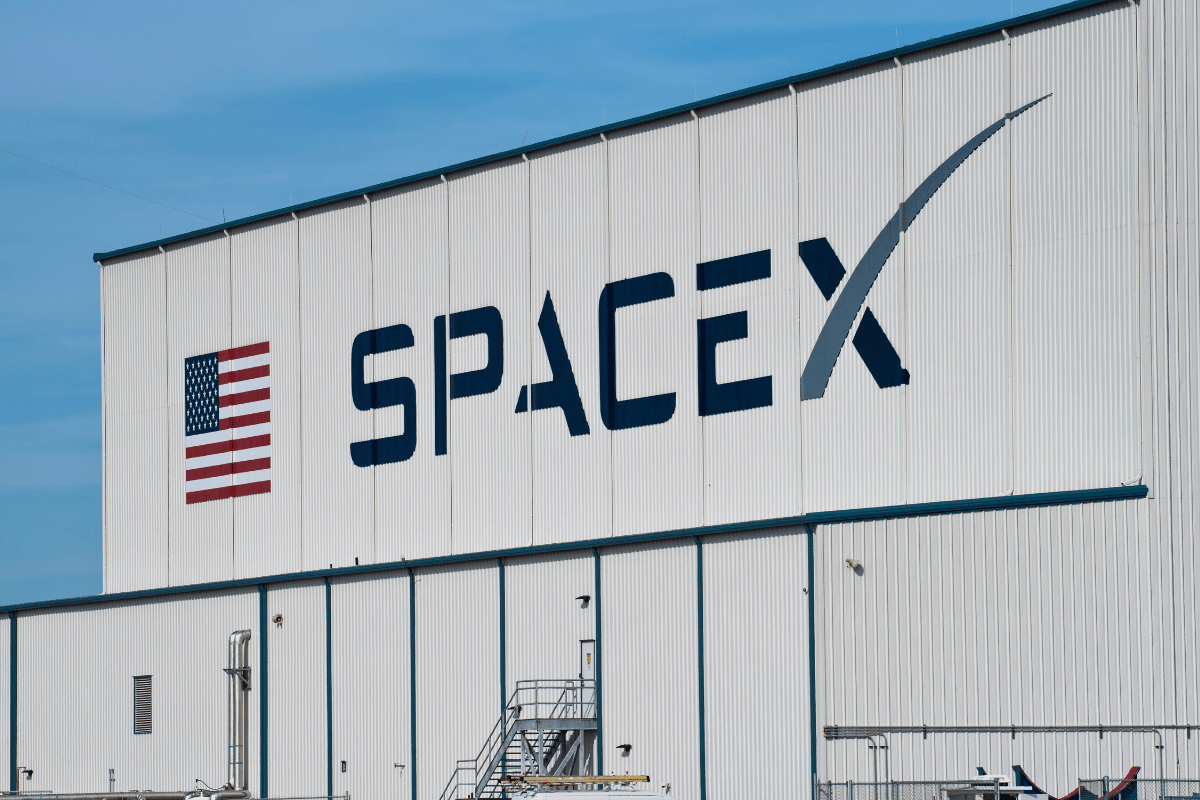
Just when Wall Street was beginning to wonder whether Elon Musk had secretly attached rocket boosters to SpaceX’s share price, the stock appears to be taking a brief detour back to Earth.
After an eye-watering rally that saw shares surge more than 50% within days of joining the Nasdaq in the largest public listing in history, SpaceX stock has started to wobble ahead of another key week for investors. The pullback comes after one of the most astonishing post-IPO runs ever witnessed, with traders piling into Musk’s aerospace and satellite giant as though tickets to Mars had suddenly gone on sale.
The cooling-off period follows a meteoric rise that briefly propelled SpaceX past Amazon to become the world’s fifth most valuable company. At its peak, the company was valued at around $2.78 trillion, overtaking Jeff Bezos’ e-commerce and cloud computing empire, which currently sits at roughly $2.66 trillion.
For a company that only made its stock market debut days ago, it has been a remarkable ascent. SpaceX’s record-breaking IPO raised $75 billion and initially valued the company at around $1.77 trillion. Since then, investors have treated the stock less like a conventional aerospace business and more like a rare collector’s item signed by Musk himself.
Musk Mania Hits Turbulence
The enthusiasm has been driven by a potent cocktail of Musk fandom, excitement around Starlink’s growing dominance, and investor belief that SpaceX can evolve into something far bigger than a rocket-launch provider. Bulls have eagerly embraced Musk’s vision of combining space technology, satellite communications and artificial intelligence into a sprawling next-generation technology powerhouse.
But gravity, as astronauts will tell you, has a habit of reasserting itself eventually.
Shares slipped around 6% on Wednesday as the initial retail-investor frenzy began to cool. Analysts noted that the first three trading sessions attracted a historic wave of buying activity, with retail investors pouring money into the stock at levels rarely seen outside meme-stock mania or a particularly enthusiastic Taylor Swift ticket release.
The retreat does little to diminish what has already been a landmark week for Musk. Even after the recent decline, SpaceX remains one of the most valuable companies on the planet, having added hundreds of billions of dollars in market value in a matter of days. At various points during Tuesday’s session, the company even flirted with overtaking Microsoft before settling back down in the rankings.
Investors are now weighing whether the stock’s extraordinary valuation can continue to climb. Critics point out that SpaceX generated less than $19 billion in annual revenue last year and remains heavily reliant on future growth expectations to justify its towering market capitalisation. Supporters counter that betting against Musk’s companies has historically been an expensive hobby.
For now, the market appears caught between fear of missing out and fear of paying too much. One thing, however, appears to be beyond dispute. SpaceX has transformed from a private rocket company into Wall Street’s hottest new obsession almost overnight.
If recent trading is anything to go by, investors should probably keep their seatbelts fastened.
Also in IT News
Government Hits Mute on Under-16s’ Social Media Accounts
The UK is preparing to follow Australia’s lead with a landmark ban on social media for under-16s, in what ministers are billing as an attempt to “give kids their childhood back.” The move has been called “a win” by some campaigners, seen as a long-overdue response to online harms, misinformation and inappropriate content.
Not everyone is convinced, however. Cambridge psychologist Professor Sander van der Linden argues that while measures such as blocking stranger messaging and sexualized AI chatbot interactions are sensible, a blanket social media ban risks missing the point. In his view, the real issue lies with platform design rather than teenage users.
Van der Linden also points to Australia, where around 60% of children are reportedly finding ways around restrictions using things like VPNs, suggesting that bans may be easier to announce than enforce. Meta warns that age-verification tools could raise fresh privacy concerns, while supporters insist that stronger safeguards are urgently needed.
In other words, Britain may soon discover that keeping teenagers off social media is harder than getting them to tidy their bedrooms.
America Puts Anthropic Behind a Digital Border Wall
In a dramatic intervention, the US government ordered Anthropic to suspend access to its advanced Fable 5 and Mythos 5 models for all foreign nationals, citing national security concerns. Anthropic said the directive applies whether users are inside or outside the US, and even includes some of its own non-US employees.
It has raised questions over whether frontier AI should be governed more like software or uranium. Anthropic argues the decision may stem from a misunderstanding over a limited jailbreak vulnerability and is pushing to restore access. Meanwhile, US officials appear determined to keep the most advanced AI capabilities under tighter control.
The political mood was summed up neatly by Department of War CIO Kirsten Davies, who declared on X that “national security” matters more than “clickbait and pre-IPO valuation.” In other words, Silicon Valley may have discovered that when AI starts looking strategic, Washington suddenly wants a seat at the keyboard.
Anthropic Sued by Authors Who’d Quite Like to Be Paid for Their Books
Once again, Anthropic has found itself back in hot water, this time facing a sprawling copyright lawsuit from more than 100 authors who allege the AI company built part of its business on a giant library of pirated books. The complaint claims Anthropic downloaded millions of books from notorious online shadow libraries using BitTorrent, creating what plaintiffs describe as a permanent “central library” of copyrighted works without permission or payment.
The filing accuses Anthropic of choosing piracy over licensing to avoid what CEO Dario Amodei allegedly described internally as a “legal/practice/business slog.” Plaintiffs further argue that the company “stored everything forever,” even when some books were never used for AI training.
In short, the authors’ message is that if AI companies want to train on books, they should probably buy them first. As the AI arms race accelerates, the courts may ultimately decide whether “move fast and scrape things” was ever a sustainable business model.