


 When you buy through affiliate links in our content, we may earn a commission at no extra cost to you. Learn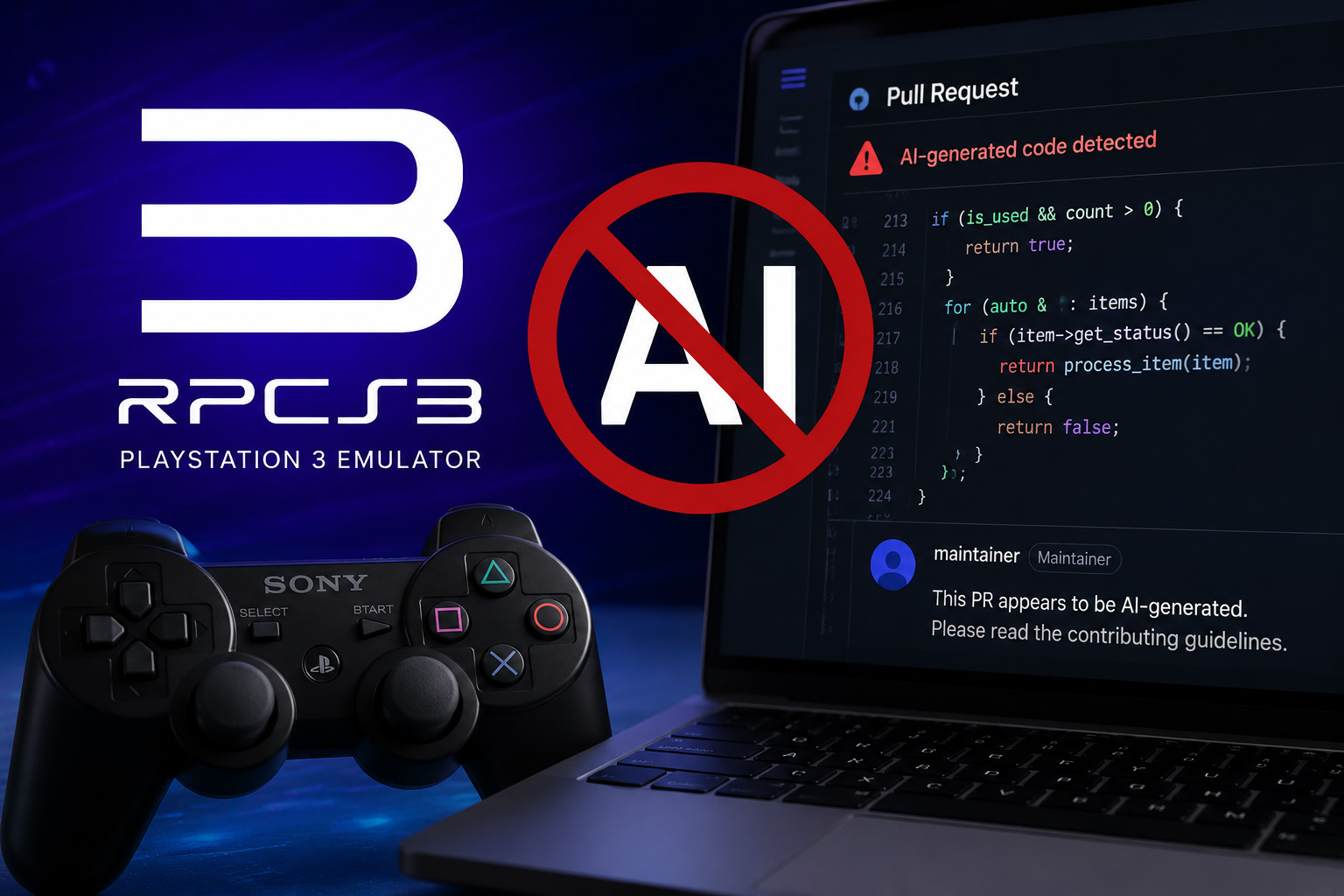
RPCS3, probably the best-known and most popular open-source PS3 emulator, has updated its contributor rules after maintainers said they had seen a dramatic rise in poor pull requests for code generated with AI tools.
The team addressed the problem directly in a post on X, asking contributors to stop sending what it called “AI slop code pull requests.” It also warned that people who submit AI-generated changes without explicitly saying so may be banned from contributing to the repository.
The project’s updated guidelines now make the devs’ expectations clearer. Going forward, contributors can use AI tools to help with research, reverse engineering, or development, but they remain responsible for anything they submit. In practice, that means they need to understand the code and test it before creating a pull request. Not doing so will risk being banned from making further contributions, especially if the use of vibe-coding is not clearly labelled.
PS3 Emulation is No Easy Task
RPCS3 is a free, open-source PlayStation 3 emulator that lets users play PS3 games on PC, Mac, Linux, and other supported systems. It is one of the most advanced emulator projects around, partly because the PS3’s unusual Cell processor makes it a nightmare to recreate properly on modern hardware. The project has been in development for years and is still actively updated, with the aim of improving game compatibility, performance, and accuracy over time.
As you might expect, the decision to take action against AI updates received some pushback. Some accused the development team of hypocrisy, with one comment asserting that they also use AI but “just hide it better because you actually have real coding experience.”
RPCS3’s maintainers have also said that communication with the team must come from the contributor, not an AI agent. That includes GitHub comments, code comments, and replies during review. Automated or AI-agent-submitted pull requests must be disclosed in the PR description, along with details of what was generated and what human review took place.
The concern is easy to understand. Open-source maintainers already spend a lot of time reviewing submissions, reproducing bugs, checking regressions, and making sure changes do not break existing functionality. When untested AI-generated code lands in that queue, it creates more work rather than helping.
That is especially true for an emulator such as RPCS3, where apparently small changes can affect performance, stability, or game compatibility. PS3 emulation is technically demanding, and the project has spent years improving how commercial games run on PC. Bad code can waste maintainer time at best, and damage the user experience at worst if it slips through.
AI Kill Switch Pondered
The situation reflects the wider problem now facing many open-source projects. AI coding tools can be useful in the hands of experienced developers, but they also make it easier for people to produce plausible-looking code they cannot properly defend. That, combined with people’s natural urge to contribute to something that is meaningful to them, leaves maintainers needing to sort useful contributions from machine-generated guesswork.
In February, The Register reported that GitHub was mulling over the introduction of a ‘kill-switch’ with Product Manager Camilla Moreas saying, “We’ve been hearing from you that you’re dedicating substantial time to reviewing contributions that do not meet project quality standards for a number of reasons – they fail to follow project guidelines, are frequently abandoned shortly after submission, and are often AI-generated.”
“As AI continues to reshape software development workflows and the nature of open source collaboration, I want you to know that we are actively investigating this problem and developing both immediate and longer-term strategic solutions.”
RPCS3 is not banning AI-assisted development outright. Its position is that contributors must be honest about how AI was used and must take ownership of the final work.
For users of the emulator, there is no immediate change. RPCS3 remains in active development. The new rules are mainly about protecting the project from wasted review time and keeping future updates stable.