

 When you buy through affiliate links in our content, we may earn a commission at no extra cost to you. Learn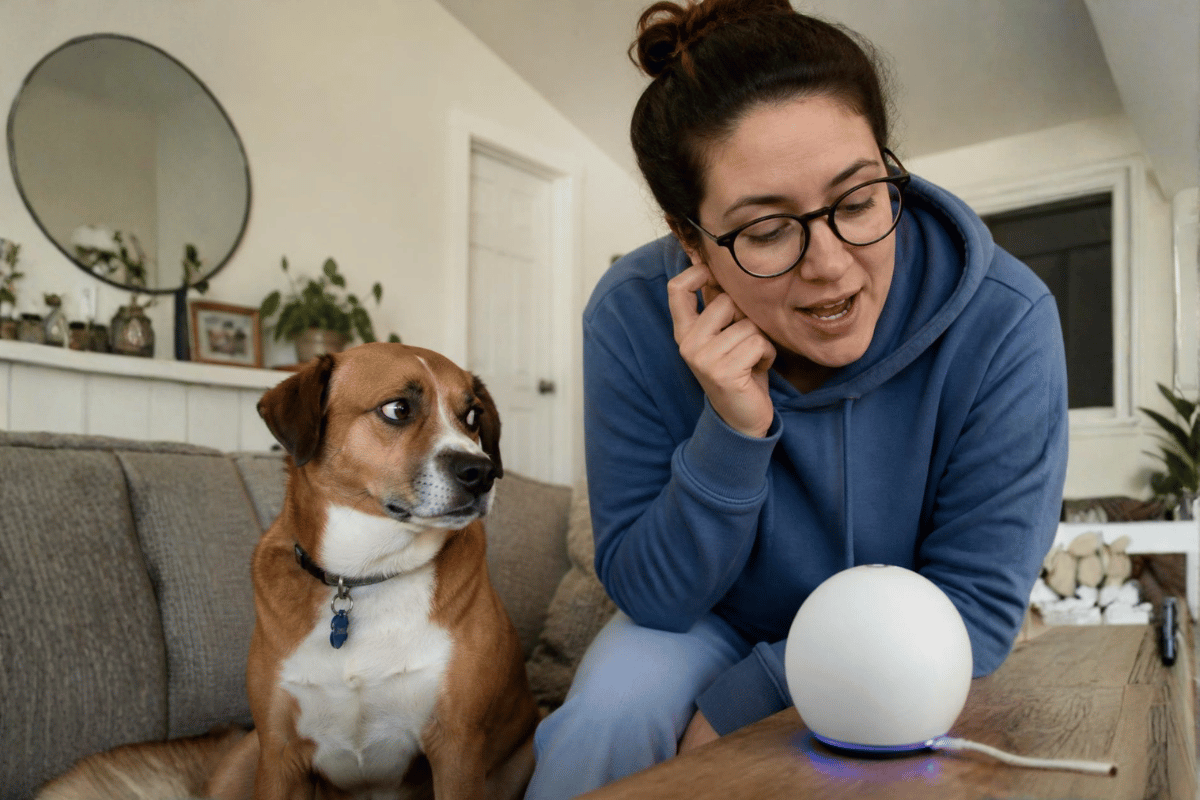
OpenAI’s first gadget is a talking companion that follows you around your house. A Bloomberg report on July 14 finally shed light on what Sam Altman and Jony Ive have been building for over a year.
The answer is more modest than most people expected, with OpenAI now planning the device as a portable smart speaker with no screen, a camera, and moving parts that make it feel alive.
Some met the reveal with skepticism, especially as OpenAI bought Ive’s hardware startup, io Products, for $6.5 billion. However, OpenAI’s pitch, according to people familiar with the project who spoke to Bloomberg, is that the device creates a completely new category and isn’t just another speaker. They present it as a home computer created for the AI era, not a speaker with a chatbot attached to it.
The idea is for it to control your smart home appliances, play media, answer questions, handle messages, and apply the full range of what ChatGPT can do. It’s designed to get to know you, growing more personalized and proactive, the longer it sits in your kitchen.
The hardware details that have leaked so far are interesting, as the company says that adding a camera and various sensors allows the device to understand its surroundings and read context. There’s also a rechargeable battery, so users do not have to tether it to a single outlet in a room.
Bloomberg’s reporting describes a device you might carry into the laundry room while doing chores, into the kitchen to help with cooking, and then into your bedroom to play music. The movement is just enough to make the device feel like it’s something that has an actual presence and doesn’t just sit there.
Reports indicate that OpenAI believes the product’s standout feature will be its personality, which could connect with people on a recognizably human level. This direction explains the team that OpenAI put together to assemble the device.
Ive’s studio, LoveFrom, controls the design and creative direction, with former Apple head of industrial design Evans Hankey reportedly leading the speaker’s development. OpenAI’s chief hardware officer is Tang Tan, who led the iPhone product design.
OpenAI expects its device to run GPT-Live, a new voice model that the company launched in July to replace the existing ChatGPT voice experience. GPT-Live is full duplex, which means that it can listen and speak at the same time, sit through pauses without jumping in, and give small verbal ticks that make things feel like an actual human conversation.
This is notable for anyone who has ever tried having a conversation with a smart speaker before. The rigidity of the first generation of voice assistants is the core reason why they didn’t turn into companions. A model that can track a conversation and wait while someone interrupts it is a different product. OpenAI said that over 150 million people already use ChatGPT’s voice and dictation features on a weekly basis.
OpenAI’s Speaker Vision Goes Beyond Hardware
The other side of things is agents, which OpenAI has spent the past year developing as models that can complete multi-step tasks with minimal supervision.
The Bloomberg report comes at an interesting time, as Apple sued OpenAI and two former employees on July 10, alleging that they stole trade secrets to support OpenAI’s hardware efforts. The complaint notes that OpenAI has hired approximately 400 former Apple staff members in recent years, including the person who used to oversee product design for the iPhone and Apple Watch.
OpenAI’s position, per Bloomberg’s sources, is that its speaker differs enough from any of Apple’s current products that a trade secret claim is unlikely to achieve much. Apple’s smart speakers are still the HomePod and HomePod mini, which don’t have a camera, battery, moving parts, or a personality.
One issue is what Apple hasn’t shipped so far. The company has delayed its own home hub, which reports call J490. Apple built it around a square display mounted on a robotic arm with a camera for video calls and the new Siri AI in charge. Apple has asked the court for an injunction, which means that if the court grants it, the order could bar OpenAI from releasing its hardware device.
That could jeopardize the current timeline of unveiling the device in 2026 and shipping it the following year. Reports describe the speaker as one of five products currently under development. Other projects reportedly include a wearable pendant, home robotics, and the long-term goal of creating an AI device that could replace the smartphone.
The big pushback regarding OpenAI’s speaker is that consumers might resist bringing a machine into their homes that is always listening and carries an attached camera.
Other Consumer Tech News
Meta Pulls Instagram’s AI Image Tool After Just Three Days
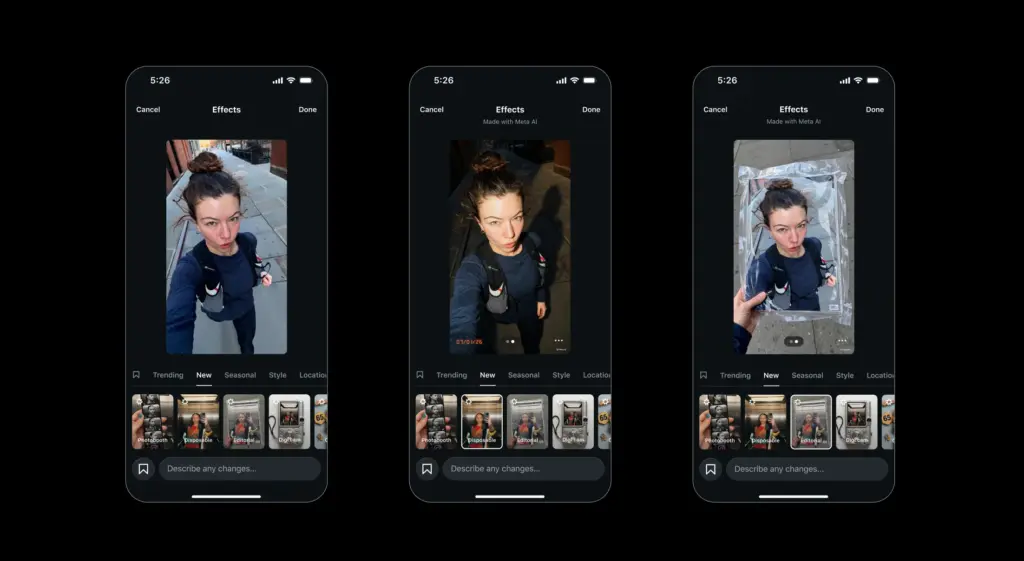
Meta launched Muse Image on July 7 with a decent amount of fanfare. This was the first image generation model that the Meta Superintelligence Labs created, in an attempt to compete with the likes of OpenAI’s ChatGPT Images 2.0 and Google’s Nano Banana 2. However, just a few days later, Meta removed the feature on July 10.
The problem was that users could @mention any public Instagram accounts inside a Meta AI prompt and generate an image referencing that person.
One could type a username and add a prompt like “swimming in the ocean,” and the system could take physical traits from the target’s public posts and create something new. The big problem was that Meta enabled this feature by default.
Accounts couldn’t give prior consent and users wouldn’t receive a notification if someone used their face. You had to dig through your settings to switch off the feature. People responded with widespread backlash, saying that the lack of an opt-in represented a serious misjudgment.
Meta released a blog post admitting that it missed the mark by not giving people control over whether the public could reference their public content. Muse Image still exists for ordinary text-to-image prompts, but it can no longer access other people’s accounts. Elon Musk’s Grok faced fairly similar criticism on X earlier this year and now faces a class action and an EU privacy investigation.
Google’s Next Smart Display Could Double as a Security Camera
Google hasn’t released a smart display for a few years now, with the last Nest Hub arriving in 2021 and Google completely cancelling the Pixel Tablet 2. A new device appears to be on the way to plug the gap, called the Google Home Display.
MacRumors analyst Aaron Perris first spotted this name in May inside the Google Home iOS app. Android Authority has since taken a deep dive into the app’s latest versions and found text strings sketching out what it does.
The headline appears to involve a camera that the code describes as something similar to a full Nest Cam with a screen. The code references three hours of event history that Google includes out of the box, and a Google Home Premium subscription that would offer 60 days of event history and 10 days of continuous 24/7 recording.
The screen would also log sound-triggered events independently, which no other current Google display offers as an option. The code also mentions the option to disable recording and only have a live view. It does not mention field of view, a physical shutter, resolution, or whether the device processes footage locally or ships it to Google’s cloud.
The company hasn’t yet confirmed the device’s existence, but the app code provides a reliable signal of intent and Google Home chief Anish Kattukaran talked about the smart display’s important position in the home back in October.
iOS 27’s Public Beta is Now Out
Apple unveiled iOS at WWDC last month and launched the public beta this week. The headline of the June announcement was Siri AI, which Apple has rebuilt from the ground up and which now acts more like a chatbot with back-and-forth conversation, world knowledge, web search, and awareness of what’s on your screen. Apple will provide a dedicated Siri app with conversation history. However, it won’t include this in the beta pages.
What users can access straight away is a revised Screen Time with additional parental controls, Safari with better tab organization, a Passwords app that can itself rotate weak passwords and Photos with access to Reframe and Extend. A big focus of this cycle is speeding up app launch times, search indexing, and AirDrop transfers. Apple expects to generally release iOS 27 around September 14.