


 When you buy through affiliate links in our content, we may earn a commission at no extra cost to you. Learn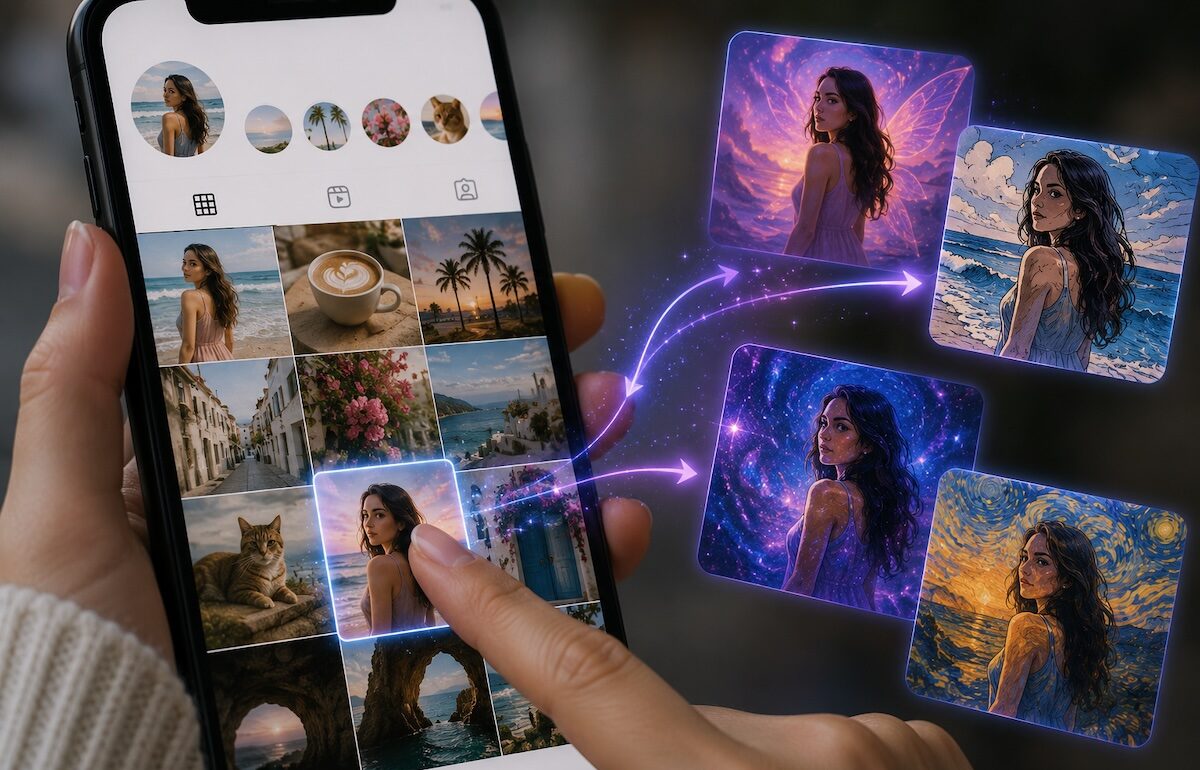
Instagram users with public accounts may want to check their settings, as Meta now lets anyone use publicly-posted photos to create new AI-generated images without requiring consent. The new feature can be turned off, but is opt-out rather than opt-in.
The tool that lets the public use your pictures is called Muse Image, and Meta released it on July 7. It’s the first image-generation model from Meta Superintelligence Labs.
To use photos from a public account, all users have to do is @-mention an eligible public Instagram account in the Meta AI app and generate new images using photos from that profile.
If you’re 18 or older with a public Instagram account, you were automatically opted in. You’ll have to turn off the feature in Instagram’s “Sharing and reuse” settings if having strangers turn your photos into AI creations isn’t appealing to you.
Users with public accounts don’t receive any notification from Instagram when someone uses their photos to generate new AI images. Private accounts are automatically excluded.
The rollout has already sparked criticism. In a post on X, SAG-AFTRA, the labor union representing performers and broadcasters, called on its members and all Instagram users to opt out of the new tool.
Meta claims its Muse Image tool has safety guardrails in place and says it will take action against content that violates its community standards. However, that statement has done little to calm Instagram users’ fears about losing control over their content.
The social media giant’s actions are also raising a bigger question for Instagram’s millions of users. What exactly does it mean to have a public account in the age of generative AI?
Public Instagram Photos Fair Game for AI Source Material
Since Instagram launched in 2010, the difference between a public and private account has always been pretty clear.
If you had a public account, anyone could see your posts, while if your account was private, your posts were limited to approved followers. Muse Image adds a new use to that choice.
Before Muse Image, strangers could download your photos and put them into a separate AI tool if they wanted to. The difference is that Meta has now built that process directly into its own AI ecosystem.
Mention an eligible Instagram account, and Muse Image can use photos from that profile to generate a new AI image.
The new tool also raises questions about consent. If you signed up for an Instagram account five or 10 years ago, you agreed to make your posts visible under the product as it existed at that time.
There’s no way you could’ve known that the public account setting you selected back then would later help determine whether a stranger could use your photos in a generative AI tool.
And that gets to the heart of the issue for many users: having a public account shouldn’t automatically equal permission for every future technology a platform builds.
Also in Consumer Tech News
Meta Will Disable Smart Glasses Cameras if Recording Light Is Tampered With
In a July 7 question-and-answer posted to its website, Meta announced that it is updating its AI glasses so that the camera will stop working if the device detects that its capture LED has been physically tampered with or destroyed.
The white light flashes whenever the glasses are taking a photo or recording a video, and Meta says it has no off switch. Its second-generation Meta AI glasses already disable the camera when the LED is blocked, but the company says some users have tried to modify or destroy the light.
Meta is also taking down ads, posts, and Marketplace listings for LED-tampering services. The company said it may ban accounts or take legal action against businesses selling them.
The update reminds us all of the basic problem with these camera-equipped glasses. Sure, having a prominent recording indicator is great, but only if people know the person wearing the glasses can’t easily defeat it.
Google Will Tell You When an Ad Was Made With AI, But There’s a Catch
If you’ve ever looked at an ad and wondered whether it was made with AI, Google will now let you know.
The tech giant is adding a “How this ad was made” section to My Ad panel so users can check whether generative AI created or altered an advertisement.
Google says the new feature will be available globally, and users can access it through the three-dot menu or information icon on ads across Search, YouTube, and Discover.
If an advertiser uses Google’s own generative AI tools, the company will automatically add a disclosure.
For ads made with third-party AI tools, Google is giving advertisers a control to indicate that they used generative AI. Whether or not the label appears directly on the ad will depend on local requirements.
There’s an obvious problem with this new policy. Google can automatically identify AI use within its own advertising tools. However, if an advertiser uses third-party tools, the company is relying on the advertiser’s good faith in disclosing its use of AI.
As AI-generated advertising becomes harder to spot, transparency will only go so far when consumers have to search for a label, and the information may depend on self-reporting.
Claude’s New Reflect Tool Wants You to Think About How Much AI You Use
Anthropic has launched a new beta dashboard that lets Claude users look back at how they’ve been using the AI chatbot and think about whether they should use it differently.
If you’re a Claude user, you’ll be able to use the new Reflect feature to check your key topics, usage patterns, the types of tasks you work through, and when you use Claude most.
In the dashboard, you can review your activity from the past 1, 3, 6, or 12 months and set quiet hours or reminders to take breaks.
The AI giant says the dashboard could encourage users to consider which tasks they still want to do themselves, even when Claude could complete them faster.
Claude’s tool arrives as more and more people make AI chatbots part of their everyday routine for work, research, advice, and personal conversations.
And as that use grows, AI companies are starting to face questions that look a lot like those social media platforms have had to confront for years: At what point does a useful tool become too much of a good thing?