

 When you buy through affiliate links in our content, we may earn a commission at no extra cost to you. Learn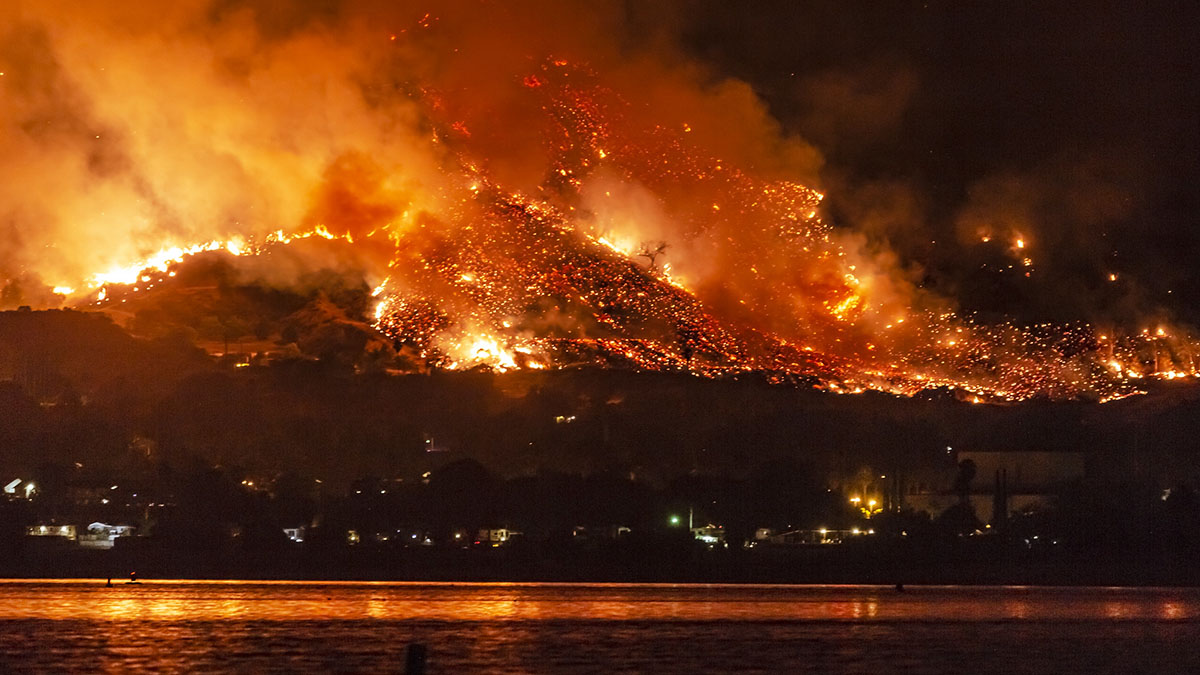
We’re approaching the midway point of wildfire season, and although 2026 has been a milder year than some others in recent memory, anxieties remain high, particularly in the American southwest.
New studies on the phenomenon are published almost daily. One of these found that “high-severity” fires are now the predominant form of both forest fires and wildfires in California, while “low-severity” fires were once more common.
That may sound like an obvious observation to anyone who followed last year’s Eaton and Palisades fires. However, the line between low-severity and high-severity isn’t arbitrary. The study defines high-severity fires as those that completely clear out the vegetation from an area.
The high-intensity fires have very different ecological ramifications from smaller ones. Those that spare larger trees and some portion of the plants are actually beneficial and ecologically necessary.
Even within the high-severity group, the extent of the fires has grown. High-severity forest fires now clear out ten times more acreage annually than they did 40 years ago. For wildfires, the difference is thirtyfold.
Much of the discussion around wildfires centers on climate change. To be sure, that’s part of the problem. Yet it’s only the second cause addressed in the paper. The first cause identified by the researchers is, ironically, fire prevention efforts.
The increase in fire severity was greatest in the areas with the densest biomass. The reason for that density, the researchers say, is the accumulation of fuel that would have been burned up in earlier fires, had they not been put out quickly.
In other words, we’ve collectively decided, at a policy level, to trade frequent, ecologically beneficial small fires for the occasional catastrophic inferno. Making matters worse is what grows back first after a severe, stand-clearing fire: drought-susceptible grasses and shrubs.
Heatwaves Increase Short-Term Fire Risk
The most-discussed aspect of climate change is increased temperatures, with each summer being, on average, hotter than the one before. The number of heatwave days on the U.S. West Coast has risen over the last quarter-century, from an average of just under 20 days per year circa 2000 to right around 30 at present.
Naturally, that impacts the rate of fires. Even now, only 12% to 15% of warm-season days in the studied region count as being part of a heatwave, yet a separate study found that 42% of the area lost to fires happened during or within the five days following these periods.
But even when it comes to heatwaves, the causality is more complicated than one might expect. The natural assumption is that heat causes the forests to dry out and thus burn more easily. While that’s true, it’s only one of several effects. Even during wet heat, the rate of fires went up. The researchers speculate that this is because moderately rainy heatwaves don’t saturate the vegetation enough to prevent combustion, yet do mean there is more lightning to start the fires.
Human behavior during a heatwave also matters. In the cooler northwest, the number of fires caused by humans increases during a heatwave. Yet in the southwest, that number goes down, as people are more likely to be indoors, hiding from the heat, than outdoors engaging in the sort of activities that can start a fire.
Climate and Fires Are Riddled With Counterintuitive Paradoxes
These sorts of studies are important because, even though the top-level findings seem straightforward enough, the underlying mechanisms are often the opposite of what you’d think.
For instance, the heatwave study found that heat and dryness are only a short-term risk factor. On year-to-year timescales, humidity is the bigger issue and, surprisingly, it’s greater humidity that increases future risk. That’s because those highly flammable expanses of grass and shrubbery grow faster when it’s wet, even if they only ignite when there’s a subsequent dry spell.
In other words, alternating wet and dry periods are probably the worst of all. Unfortunately, that’s exactly what hotter air tends to do, as it can build up more moisture over longer periods before unleashing it all at once. Equally paradoxically, fires then lead to more flooding, because they’ve destroyed the vegetation that would absorb the water, while baking the soil hard.
Likewise, the benefits of low-intensity fires defy naive expectations. For instance, old-growth forests of oaks and similar trees require fires that burn out smaller plants and enrich the soil with their nutrients, while sparing the thick-barked giants. Yet if a more intense fire wipes out those oaks, they won’t come back for decades, if at all.
Where I live, in Nova Scotia, Canada, every roadside is thick with lupins. But the ones you see are the invasive large-leafed lupin from western Canada, while the native sundial lupin is on the verge of extinction. The reason is that the local species sprouts best in areas that have been cleared out by wildfires, which we have largely prevented.
The Real-World Consequences of ‘Common Sense’
These counterintuitive realities of fires are politically meaningful because voters and the politicians they elect rely so heavily on so-called “common sense” to guide policies.
It seems obvious that if the problem is too many fires, the solution is to put them out whenever we can. Yet, that’s not what a science-guided policy would tell us to do.
There has to be some sort of mitigation plan, but if the goal is to reduce fire severity and preserve biodiversity, we need to allow low-intensity fires to happen, but find a way to prevent them from turning into high-severity conflagrations.
Mitchell Hung, one of the researchers on the fire-severity paper, summed it up in an interview with The Conversation, saying:
“We all remember Smokey Bear—’Only you can prevent forest fires.’ That had an inadvertently damaging effect on these ecosystems, which evolved alongside more frequent, less severe fires to keep them healthy. Preventing a fire often just prevents it in the short term, but kicks the can to a later point when there’s even more fuel to burn.”
Also in Science News
Data Centers Might Actually Be Lowering Your Electricity Bill
Speaking of counterintuitive truths, a trio of economists have released a paper challenging the assumption that growing electricity use by data centers is likely to increase rates for residential consumers.
“Common sense” economics is that an increase in demand drives an increase in cost, but that’s only true when the supply is limited or the cost to increase the supply keeps going up. Larger power plants and electrical grids are more efficient than small ones, so if power companies upgrade their infrastructure in response to data centers, the average cost per kilowatt can actually come down. Or, at least, grow more slowly than it would otherwise.
The researchers back that theoretical point up by showing that the national average cost of electricity has grown more slowly than the overall cost of goods, that the amount of growth correlates negatively with the number of data centers in each state, and that the states with the greatest increases have other clear causes for that, such as wildfires.
Using an instrumental variables approach to estimate the cause-effect relationship, the researchers found that each increase of 10% in power use by data centers most likely brought down in-state power costs by 0.4%.
3I/Atlas Comet Comes From a Harsh, Cold Place
Last summer, astronomers discovered a comet passing through our Solar System that turned out to be only the third confirmable interstellar object we’ve sighted. It’s considerably bigger than Oumuamua, which got space enthusiasts excited in 2017, and probably older than our Sun, with an estimated age of 10 to 12 billion years.
Though it’s now on its way back out into deep space, astronomers have gotten a good look at it over the past year. Its composition tells a story of a very different star system than our own — one which is much colder and has less radiation.
Specifically, its approach to our Sun caused the off-gassing of copious amounts of methane and carbon dioxide, which would not have been there in those quantities if it had ever been in such a warm environment as ours. Meanwhile, its water was found to include deuterium — a heavier isotope of hydrogen — in higher quantities than our comets. That suggests bombardment by intense radiation but, again, relatively low temperatures.
Medical Researchers Image Rats’ Glymphatic Systems
You’ve probably heard of the lymphatic system, but have you heard of the glymphatic system? It’s kind of the same idea, but within your brain. Spinal fluid circulates through the glymphatic system and carries away toxins while you sleep.
Scientists suspect that glymphatic dysfunctions may play a role in Alzheimer’s and Parkinson’s, among other brain disorders. However, it’s a fairly recent discovery, so it requires new technology to study it properly. A group of two-dozen Chinese and American researchers have found a non-invasive technique using photoacoustic tomography.
Essentially, they inject a special “dye” into the glymphatic fluid that emits ultrasonic waves when optically stimulated with an infrared laser. That laser can penetrate a few centimeters into tissue without damaging it, and an ultrasound device can pick up the resulting acoustic pulses.
The technology has not yet been tested on humans, only rodents, but holds the promise of advancing neuroscience by leaps and bounds once proven to be safe.