

 When you buy through affiliate links in our content, we may earn a commission at no extra cost to you. Learn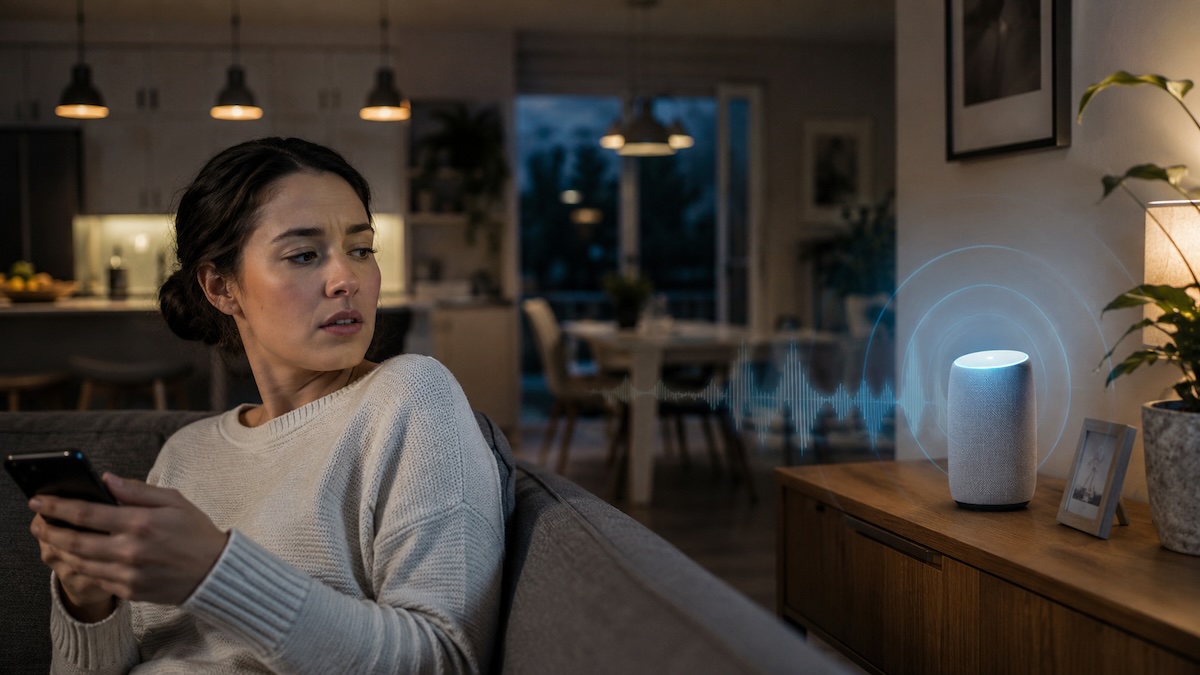
Every time users see an uncannily-timed ad, they worry their phone is listening to them. Yet three marketing companies have just had to settle a suit for falsely marketing that exact concept to ad buyers.
The Federal Trade Commission announced on May 21 that Cox Media Group, MindSift, and 1010 Digital Works had agreed to pay $930,000 to settle deceptive advertising allegations.
The FTC said the three companies had falsely marketed an AI-powered “Active Listening” ad service as a tool businesses could use to target customers based on private conversations picked up by their smart devices.
At first glance, the case seems to confirm one of the most common fears of the digital age: that our phones, smart speakers, and smart TVs are quietly listening to our private conversations. But it turns out that the AI-powered snooping that those companies promised the smart devices could do never happened.
Instead, the FTC alleges, the companies used resold email lists from data brokers, all while telling businesses that their customers had opted into voice-based targeting, when they hadn’t.
The settlement doesn’t show that smart devices were secretly recording people to display personalized ads. What it does show is that some businesses absolutely would use technology to intrude into our private lives if they could. That’s something that should worry all of us, even if this particular service never used voice data in the way it claimed.
The Demand Is There for Surveillance-Style Ad Tools
The FTC alleges that the companies promoted “Active Listening” as a service that could listen in on conversations captured by smart devices, “in real time,” and use the information gleaned from them “to target ads to consumers within a specific geographic region.”
The agency says the companies advertised the tool as a way to reach consumers in their area based on what they had talked about when they were close to their devices.
For FTC Bureau of Consumer Protection Director Christopher Mufarrige, the case came down to a basic truth-in-advertising problem. “Not only did the product these companies marketed not do what they claimed it did, but they also misled potential customers by claiming consumers had opted into this service when it’s clear they did not,” he said in the agency’s announcement.
The companies’ claim that customers opted in to what would basically amount to an eavesdropping service is one reason this case seems bigger than just a run-of-the-mill misleading tech product.
According to the FTC, the companies told businesses that customers had agreed to voice-based ad targeting by simply accepting the apps’ terms of service.
The agency rejected that argument: “Clicking through mandatory terms of service does not constitute ‘opt-in consent’ for such an invasive service or for use of consumers’ voice data from inside their homes.” It went on to say that if the technology had worked as promised, it would have violated the FTC Act because the companies hadn’t obtained “adequate consent” from their customers.
It’s at this point where things get uncomfortable from the consumer perspective. Even though Active Listening didn’t use voice data, the marketing claim assumed that with the right consent, monitoring private conversations should be fair game. If we take the FTC’s complaint at face value, at least some businesses were willing to buy into that belief.
This case isn’t a smoking gun that proves smart devices are secretly recording conversations for ads or other nefarious purposes. Nevertheless, it is unsettling that businesses see the commercial value in using advertising tools that could access private moments that the majority of informed consumers would never knowingly hand over.
Creepy Targeted Ads Make Phone-Spying Fears Feel Real
Many of us have had the eerie feeling that our devices were listening to us. You mention a product, destination, medical symptom, or TV show in a conversation, and then minutes later, you see a related ad on Instagram, Facebook, YouTube, or another app. The timing often feels too good to chalk it up to just a strange coincidence.
A 2024 study published in Social Media + Society looked at this phenomenon in the United States, the Netherlands, and Poland. The researchers described what they called “conversation-related advertising” as ads that appear to be related to a person’s previous offline conversations. They also used the term “e-eavesdropping” to describe the belief that electronic devices are listening to those conversations.
They found that the idea of conversation-related advertising was common in the countries they studied, with people in the U.S. being more likely to believe e-eavesdropping than those in the Netherlands and Poland.
The study also pointed to some more benign explanations for why ads can feel connected to offline conversations. Modern ad tech already uses behavioral, interest, social, and digital trace data, which can make ads feel connected to offline conversations even when a microphone didn’t create the targeting signal.
A user may also notice an ad that appears to be connected to a conversation they had offline because the conversation primed them to notice it, or because the connection is coincidental.
None of that means consumers are imagining things or shouldn’t feel uneasy. Smart speakers and voice assistants have made it normal for us to have microphones throughout our homes, and voice data has already raised real concerns.
A study by researchers at the University of California, Berkeley, and other institutions described smart speakers as “always-on microphones located in people’s homes” with “significant privacy implications.”
As part of the study, the researchers surveyed 116 owners of Amazon and Google smart speakers and found that “almost half didn’t know their recordings were being permanently stored or that they could review them.” The same participants “were strongly opposed to [the] use of their data by third parties or for advertising.”
That background helps explain why the Active Listening claim sounded so believable, even if the FTC says the service never used voice data. People have already been asked to trust devices that sit in their homes, wait for voice commands, and store recordings in ways many users don’t fully understand. In that environment, an AI ad tool built around private conversations doesn’t seem all that surprising.
While the FTC case doesn’t prove our devices are listening to us, it does show that AI ad tech has made that kind of surveillance sound believable enough to sell. And if you’ve ever wondered why an ad seemed to appear right after a private conversation, that’s probably unsettling enough.