

 When you buy through affiliate links in our content, we may earn a commission at no extra cost to you. Learn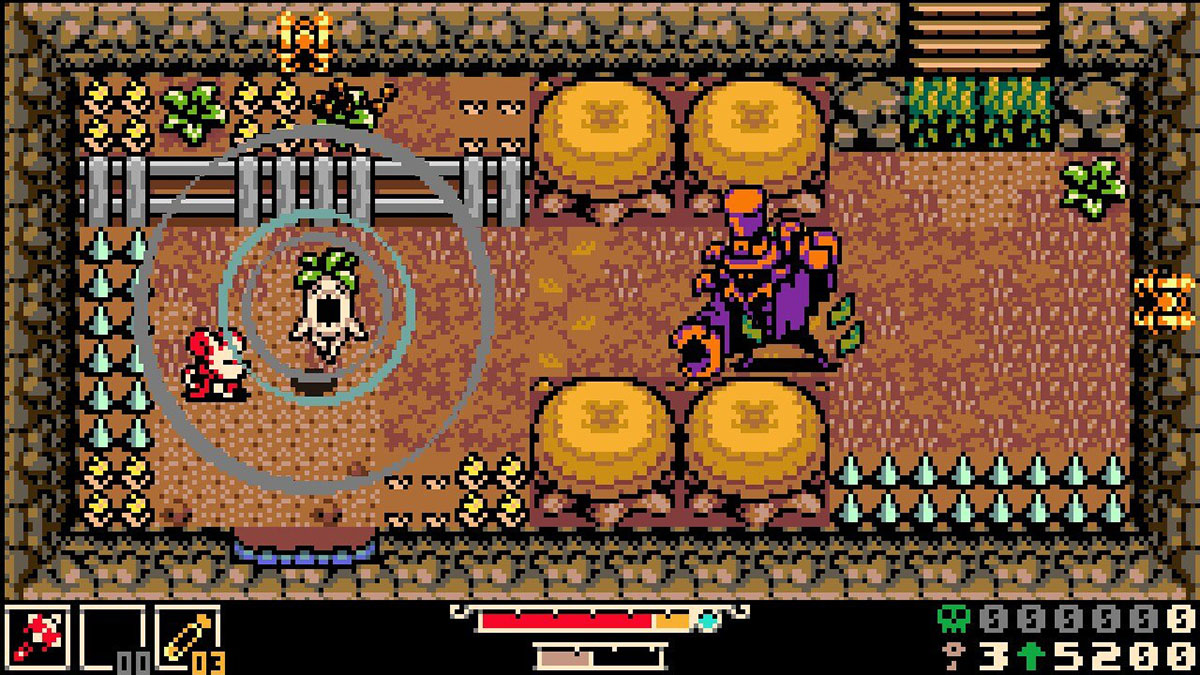
Each year, graphics technology advances, and AAA-industry video games look ever-more realistic, yet the surprise success of indie darling Mina the Hollower shows that not everyone sees that trend as a positive.
Mina, which plays like a more difficult version of the first few Zelda games, sold over half a million copies in its first two weeks. That didn’t “break the internet” in quite the same way as Silksong, last year’s indie hit that sold three million in the first week. However, it’s still a figure that major game studios will have taken note of, given that it was made for $5 million, about 1% of what they sometimes spend.
It’s easy to chalk the success of a game like Mina up to nostalgia, but I think there’s more to it than that. Even kids who are too young to have experienced the 8- and 16-bit era firsthand show an appreciation for low-fi aesthetics.
We may, in fact, be approaching “peak realism,” which, in turn, could signal that the countertrend will soon go mainstream. Game graphics aren’t yet fully realistic, but the limiting factor may not be technology so much as gameplay. The real world is not as fast-paced and responsive as a video game, so ever-more-detailed graphics only highlight the absurdities that arise where the fiction has to make way for playability — what designers call ludonarrative dissonance.
Visual art hit a similar inflection point in the mid-19th century. Painters’ pursuit of realism had handcuffed their creative freedom, leading to the reversal that came to be called the modernist movement. Modernism was, in part, a reaction to technological advancement, but simultaneously involved throwbacks to so-called “primitive” aesthetics. Gaming may be close to that point.
Mina the Hollower Leans Into Abstraction
One of the hallmarks of the modernist movement was increasing abstraction. It began with impressionism’s loss of detail and the decorative flourishes of art nouveau, and culminated in abstract expressionism, minimalism, and conceptual art.
Abstraction isn’t only a visual concept. All games are also abstractions, to varying degrees. Technology-driven efforts toward ever-greater simulation and realism are a trend away from abstraction. Early gaming was comparatively more abstract by necessity.
Tetris is, of course, the quintessentially abstract video game. However, even the Mario Bros. franchise is quite abstract. It borrows certain notions from reality — the idea that a turtle can retreat inside its shell when threatened, for instance. Yet, there’s no real-world basis for a flower granting the ability to throw fireballs. The game’s limited palette and resolution simply required the item to be something familiar and instantly recognizable, whether or not it “made sense.”
One of the most commonly recurring abstractions of that time was grid-based level design. Many indie games still use that technique out of convenience, but Mina actively leans into it. One character, for instance, encourages you to experiment with different jumping techniques and tracks your performance in tiles. In the game’s fiction, he’s referring to stone courtyard tiles, yet it flirts with the fourth wall in a way that’s also a hallmark of modern art.
Plenty of contemporary high-tech games also involve jumping, but the specific mechanics in Mina would be at odds with a realistic environment. For instance, burrowing under the ground allows the character to burst out with enough velocity for a bigger jump. It feels right as a game mechanic, but hi-fi graphics would only call attention to the physical absurdity of that idea. The same would be true of a photorealistic Mario kicking turtles to defeat walking mushrooms.
Art Is Not Engineering
The trouble with technology as applied to games is that engineering strives for perfection, and perfection is the antithesis of art.
That is, what differentiates a piece of visual art from mere depiction is that it brings taste into play. The quality of a depiction is objective: if one rendition depicts the subject more faithfully than another, it can be said to be better.
Art is inherently subjective. The whole point is that different people can prefer different things.
That is not to say that art cannot also be realistic. The masterworks of classical art shine not only in their realism but also in the choices made in terms of composition, color, contrast, lighting, and movement. What the modernists realized is that realism is secondary to those considerations and can be given a back seat or set aside entirely.
If AAA video games have begun to feel samey, it’s because they’re all converging on the same objective ideals. But those ideals — realism, frame rate, focus-tested theories of level design, and so on — are engineering ideals, not artistic ones.
Those who hold realism up as the metric for evaluating a painting or a game do so because they lack taste. They don’t understand art and want to judge it as if it were something else instead. (This has become a weirdly politicized point in recent years, but that’s a whole other can of worms.)
AI May Be For Games What the Camera Was For Painting
One of many factors that contributed to the modernist movement was the invention of the camera in the early 19th century. Until that point, if you wanted a more realistic depiction of something, the only solution was to hire a better painter. Under those circumstances, it was natural to conflate artistic talent with faithful draftsmanship.
The camera threw that out the window. Early photographs were still inferior to the best oil paintings, but it would have been obvious to anyone at the time where the trend was headed. Technology only moves in one direction: toward better engineering and objective notions of perfection.
Even with a head start, that was a race human artists were bound to lose.
From where I stand, AI looks like it is on course to do the same thing to movies, games, and other forms of culture too recent and technology-dependent to have gone through that other modernist movement.
I believe that, unconsciously, one of the reasons people object so strongly to AI is that it exposes our collective lack of taste. It’s not that AI is bad at producing things that resemble popular art — quite the opposite. The problem is that it’s getting better at that every day. If we believe art to be an essentially human endeavor, then that implies that those popular things don’t have much artistic merit to begin with.
The camera forced 19th-century artists to reckon with the fact that they had been pursuing the wrong ideal all along. I think we’re on the cusp of a similar realization in gaming. The mainstream’s taste in games may be at an all-time low, but that’s a good thing because it means things can only get better from here.
In the meantime, go play Mina the Hollower — it’s pretty good.