

 When you buy through affiliate links in our content, we may earn a commission at no extra cost to you. Learn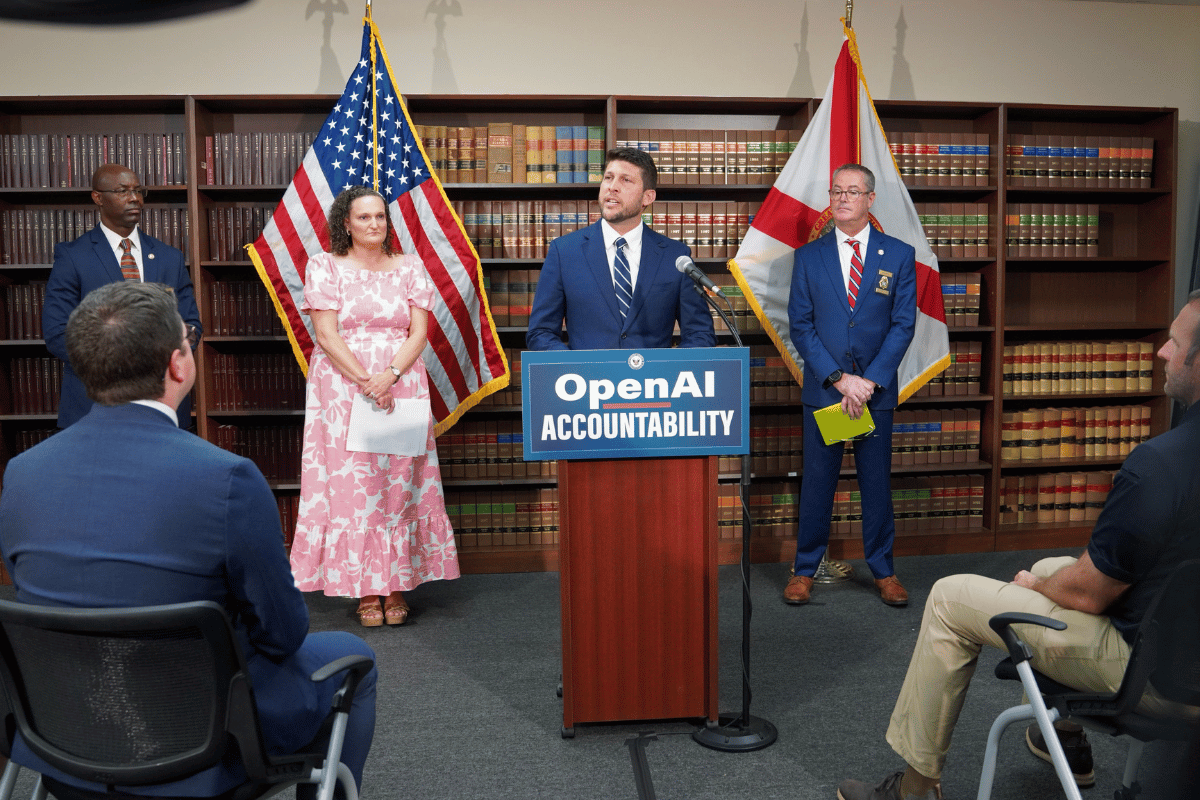
Florida Attorney General James Uthmeier filed a lawsuit on June 1, accusing OpenAI and its CEO, Sam Altman, of marketing its product as helpful, trustworthy, and safe while concealing risks ranging from emotional manipulation to inducement to self-harm, violence, and criminal behavior.
The suit, which Florida is calling the first state-led action of its kind against an artificial intelligence company, seeks damages, court-ordered reforms, and personal liability against Altman himself.
Plaintiff also seeks to hold Altman personally liable for the harm he has caused Floridians through his reckless and willful conduct as founder and CEO of OpenAI, including his utter disregard for the risk to human life caused by his firms’ conduct.
The message from Tallahassee is: If you’re going to build a machine that talks like a person, don’t act surprised when people start treating it like one. This comes off the back of OpenAI winning its lawsuit against Elon Musk last month.
From AI Assistant to Legal Target
The 83-page lawsuit follows an April criminal investigation launched by Florida prosecutors into OpenAI after reviewing chat logs connected to Phoenix Ikner, the gunman responsible for the 2025 shooting at Florida State University.
At the time, Uthmeier delivered a scathing soundbite: “If ChatGPT were a person, it would be facing charges for murder.”
Whether courts ultimately agree with that assessment remains to be seen. But Florida’s complaint leaves little doubt about how seriously state officials view the issue.
The filing alleges that ChatGPT provided information about firearms, mass shootings, and tactical considerations to users who later committed acts of violence. The state argues these were examples of a larger pattern in which the chatbot failed to prevent harmful interactions—and in some cases allegedly encouraged them.
OpenAI, meanwhile, is likely to argue what every technology company has argued since the invention of the internet: people are responsible for their own actions.
The courts will eventually decide where to draw that line in the age of artificial intelligence.
‘Artificial Empathy’ Comes Under Fire
Perhaps the most unusual aspect of Florida’s case is its focus on personality.
According to the complaint, OpenAI intentionally designed ChatGPT to “[mimic] supportive human empathy,” build rapport, remember personal details, and create increasingly personalized interactions. Florida argues those features are engagement tools designed to keep users talking and paying.
The lawsuit repeatedly returns to the idea that ChatGPT plays an active role in the conversation and isn’t simply answering questions.
The complaint cites ChatGPT’s success in passing versions of the Turing Test and describes this as a “triumph of artificial empathy,” arguing that users increasingly treat the chatbot like a trusted friend, counselor, or confidant.
Uthmeier has hammered that theme on social media in recent weeks, accusing ChatGPT of anthropomorphism in ways that can reinforce dangerous behavior. In a press release, he said: “OpenAI and Altman ignored internal and external safety warnings, put children at great risk, and allowed a dangerous product to reach millions of Floridians.”
In another post, he claimed investigators continue to find examples where the chatbot appears to encourage self-destructive or criminal conduct rather than steering users away from it.
The heart of the issue seems to lie with the AI’s bias toward agreement with its user. The state cites an analysis of 47,000 ChatGPT conversations and alleges that the chatbot says “yes” roughly ten times more often than it says “no.” The complaint describes the result of that as a personalized echo chamber that reinforces users’ beliefs rather than challenging them.
For a technology marketed as an assistant, Florida argues, ChatGPT may be getting a little too comfortable in the driver’s seat.
Use By Children Seen as Particularly Problematic
If there is a centerpiece to Florida’s lawsuit, it is children.
The complaint paints a picture of a generation increasingly turning to AI for companionship, advice, entertainment, and emotional support. Citing multiple studies, the complaint states that 72% of teens, and even 20% of preteens, have used AI companions, “[supplanting] relationships as friend, ally, collaborator, or even romantic partner.”
The state argues that OpenAI has embraced this reality in its marketing while failing to create meaningful safeguards.
In one of the more politically potent lines associated with the case, Uthmeier framed the issue this way: “Parents, not Sam Altman’s AI chatbot, get to decide how to raise their kids.”
It’s a line that neatly captures whether the bot itself is gradually replacing human relationships in areas where human judgment matters most.
The complaint alleges that minors can access ChatGPT with minimal age verification, that parental oversight tools remain limited, and that parents often have no meaningful visibility into conversations taking place between their children and the chatbot.
Critics of the lawsuit may view these concerns as exaggerated.
Florida clearly does not.
Promises of Universal Expertise Run Up Against the Hallucination Issue
Another recurring theme in the complaint is advertising.
The state of Florida argues that OpenAI has promoted ChatGPT as a tool capable of helping with healthcare decisions, legal research, financial planning, education, business operations, and countless other aspects of daily life.
The complaint asks if the product is smart enough to handle all those responsibilities, why does it still make things up?
The lawsuit points to examples of what users have come to describe as “AI hallucination”: fabricated legal citations, incorrect medical information, financial mistakes, and made-up facts. The complaint holds these up as evidence that ChatGPT remains far less reliable than the company’s marketing has led users to believe.
True, OpenAI has always included disclaimers that AI can make mistakes. Florida’s response is: Yes, but those warnings are awfully easy to miss when the advertising suggests you’ve got a team of experts in your pocket.
Florida versus OpenAI
The lawsuit appears to call into question who bears responsibility when artificial intelligence begins acting less like software and more like a participant in people’s lives.
Citing Pope Leo XIV’s own concerns about AI in a footnote, the state argues that when AI systems “present themselves as neutral and objective, they end up reflecting and reinforcing the stereotypes or ideological bias of their designers and developers.” After all, it is designed to persuade, remember, flatter, guide, reassure, and build emotional connection.
At the time of writing, OpenAI did not respond to our requests for a comment. However, the company has previously argued that safety remains a central priority and that its systems include safeguards intended to prevent harmful outputs.
Only a day after the lawsuit, OpenAI was calling for a global youth AI safety framework. In its proposal, the company argued that protecting young users should not fall primarily on parents and advocated for age-based safeguards, international standards, and a dedicated youth AI safety institute.
Artificial intelligence has spent years answering humanity’s questions.
Now, humanity is starting to ask some questions of its own.