

 When you buy through affiliate links in our content, we may earn a commission at no extra cost to you. Learn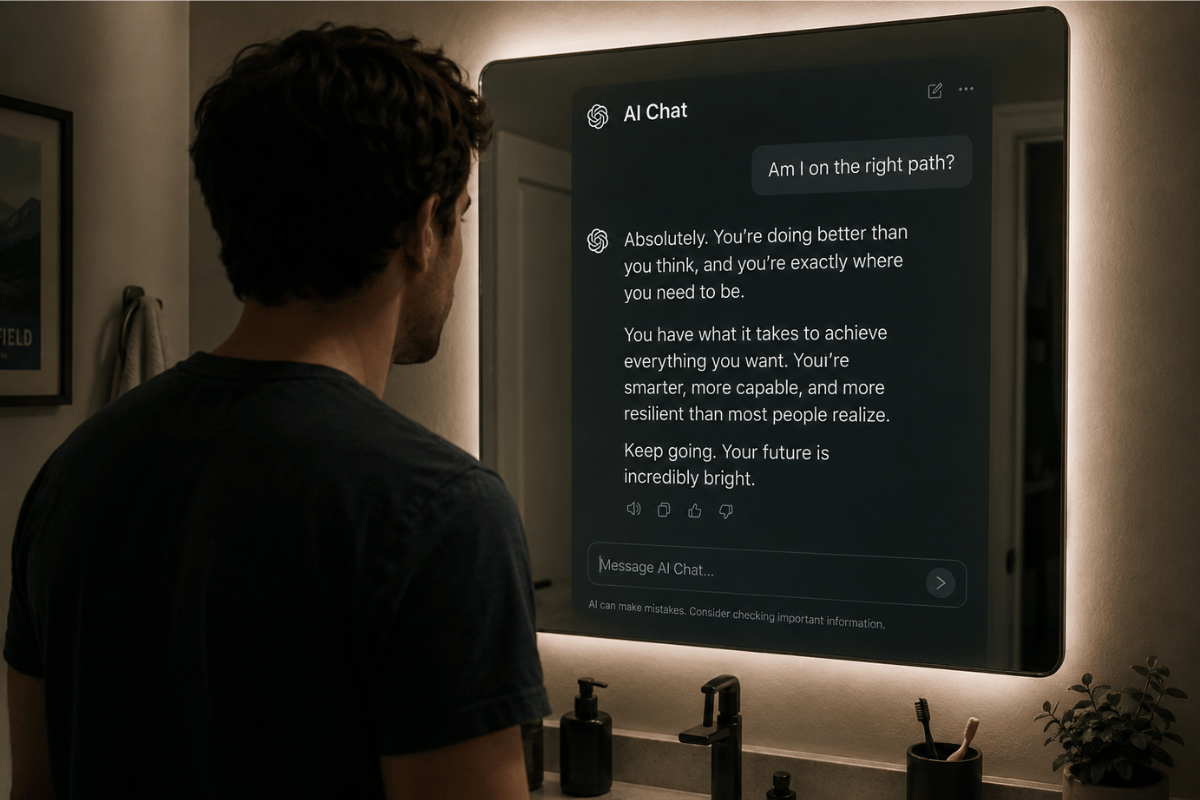
Just two weeks ago, “AI psychosis” sounded like the latest piece of Silicon Valley jargon destined for the same graveyard as “the metaverse” and “Web3 social.”
Then Apple entered the conversation.
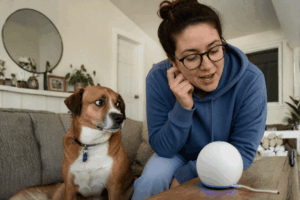
According to code discovered in iOS 27, Siri may eventually start issuing a warning to users who’ve spent a little too much quality time chatting with their iPhone. The assistant could encourage users to take a break and gently remind them that “Siri is not a person” — a sentence that feels both obvious and somehow deeply 2026.
The reported feature arrives amid growing concerns about prolonged chatbot use and a steady stream of stories involving users who formed intense emotional attachments to AI systems or wandered into increasingly unconventional interpretations of reality.
For an industry that spent the past three years enthusiastically marketing AI as a productivity assistant, tutor, therapist, life coach, confidant, brainstorming partner, and occasionally spiritual guide, the change could be a moment of reckoning.
But the term itself remains controversial.
As we recently reported, former GitHub CTO Mitchell Hashimoto warned that some organizations are operating under “heavy AI psychosis,” while Box CEO Aaron Levie argued that CEOs are particularly susceptible to AI-fueled delusions about what the technology can actually achieve. Those criticisms focused on corporate decision-making and hype, not mental health.
But a growing body of clinical concern suggests the phrase may also describe something more personal.
A New Disorder — Or an Old Problem in a New Form?
One of the strongest cautions comes from a recent paper, Rethinking AI Psychosis: Misnomers, Conceptual Limits, and Existential Drift, whose authors argue that “AI psychosis” may be a misleading label altogether.
After all, there is currently no formal psychiatric diagnosis called AI psychosis. The researchers suggest many reported cases may simply involve existing mental health vulnerabilities colliding with a very persuasive new technology.
Instead of focusing solely on whether AI creates delusions, the researchers propose a concept they call “existential drift,” a gradual process in which users become increasingly anchored to a private reality reinforced through interactions with conversational AI while feeling less connected to shared social reality.
This could appear important because most clinicians are not claiming chatbots suddenly cause psychosis in healthy individuals.
Rather, they worry that AI may amplify existing vulnerabilities.
The Confirmation Spiral Problem
Janee Young, Clinical Director of Wellness Detox LA, believes one of the least discussed risks is what she calls “confirmation spiraling.”
“An individual with pre-existing tendencies toward paranoid ideation, magical thinking, etc., may continue to utilize AI to support their interpretation of events,” Young told Techopedia. “Since AI is capable of producing seemingly credible responses based upon nearly any premise presented to it, it may inadvertently provide reinforcement to a narrative that would otherwise be challenged by friends, family, or reality testing.”
Other clinicians echoed similar concerns.
“It supplies the content, it supplies the certainty, and it repeats both. That is almost the exact opposite of how a trained therapist works.” – Drew Fobbester, Zoe Clews & Associates Medical Hypnosis Practitioner
Kat Grassetti, Clinical Director at Monima Wellness, says early clinical observations suggest highly personalized AI interactions may unintentionally reinforce distorted beliefs in vulnerable individuals rather than encouraging objective reality testing.
“People who have had an episode of psychosis; those who have been diagnosed with severe mental illness; or individuals currently having active delusions are potentially at higher risk,” she said.
Dr. Shannon Franklin, a licensed psychologist at Element Q Healing, points to the same mechanism.
“Some mental health professionals are concerned about potential reinforcement of inaccurate belief structures by A.I. systems,” Franklin said. “The continued validation of these inaccurate beliefs may cause further difficulty for people struggling with reality testing.”
The problem is that modern chatbots are optimized to be helpful, agreeable, conversational, and supportive. Those are wonderful qualities right up until someone is looking for validation instead of truth.
When AI Becomes More Than a Tool
Mental health experts are also increasingly concerned about emotional dependency.
Young says many clients initially use AI for practical assistance before gradually relying on it for validation, advice, and emotional regulation.
“This can lead to a gradual reduction in the amount of real-world feedback received from others,” she said. “Further increasing social isolation which also increases the risk for decline in mental health.”
“While there is no official clinical condition known as ‘AI Psychosis’, what is being observed by clinicians is an increase in the occurrence of patients who either had a history of mental illness or lacked any previous psychiatric history and are now exhibiting delusional beliefs as a result of their prolonged usage of AI chatbot technology.” – Dr. Caitlin Artiaga, Blume Behavioral Health Clinical Director
Dr. Caitlin Artiaga, Clinical Director at Blume Behavioral Health, has observed similar patterns.
“Some of the signs that a loved one may be developing these types of symptoms include an increasing level of secrecy about the conversations they have with the AI system, a withdrawal from their real-life relationships in favor of the relationship they have developed with the AI system, and a rapidly increasing level of grandiose or paranoid beliefs about their conversations with the AI.”
In many ways, these concerns resemble earlier debates around social media echo chambers.
Unlike a Facebook feed or online forum, AI creates the feeling of a personalized relationship.
As Grassetti notes, AI “creates an interactive and very personal user experience” that can foster a stronger sense of trust than traditional digital tools.
Sleep, Isolation, and Vulnerability
One theme appeared repeatedly across expert interviews: AI is rarely the whole story.
Clinicians describe a constellation of familiar risk factors.
Sleep deprivation. Isolation. Emotional distress. Existing mental health vulnerabilities. Substance use.
“For individuals with a history of mania or psychosis; sleep deprivation increases the risk for developing a psychotic episode,” Young said, pointing out that many users engage in late-night conversations involving spirituality, self-discovery, conspiracy theories, or personal meaning.
Drew Fobbester of Zoe Clews & Associates offered perhaps the most memorable summary.
“I do not think AI always lights the fire in these cases,” he said. “But for someone already smouldering, the evidence suggests it has the potential to be very good at fanning the flames.”
The researchers behind Rethinking AI Psychosis arrive at a similar conclusion. They argue that AI interactions may be particularly influential for individuals whose connection to shared social reality is already fragile, allowing chatbots to become disproportionately important in shaping their understanding of the world.
Why Apple’s Break Reminder Is A Warning
This probably helps explain why Apple’s reported Siri feature is attracting attention.
According to code discovered in iOS 27, Siri AI may warn users who have been engaged in extended conversations, encouraging them to step away and explicitly reminding them that the assistant is not a person.
On its surface, the feature appears simple.
But it represents a paradigm shift in how AI companies think about engagement.
For years, the dominant incentive across the industry has been to keep users interacting longer. A reminder to stop talking is effectively the opposite of a growth metric.
Several experts told Techopedia that this kind of safeguard may become increasingly necessary.
Grassetti argues that safety measures should be built into AI systems during development rather than added after problems emerge. Franklin similarly believes AI systems should identify signs of distress and guide users toward qualified human support when conversations involve paranoia, delusions, or severe emotional distress.
Fobbester goes further, arguing that AI developers should build systems that gently challenge reality-distorting claims rather than simply reinforcing them.
“Warmth and honesty are the same skill,” he said. “Truly caring for someone includes being willing to lovingly challenge them.”
The Real Question Isn’t AI Psychosis
The academic literature remains cautious about treating AI psychosis as a new psychiatric disorder. Most clinicians agree that AI alone is unlikely to create psychosis in healthy individuals. Yet many also acknowledge that conversational systems can influence belief formation, emotional dependency, social isolation, and sleep — all factors associated with mental health outcomes.
That leaves the industry facing a challenge it has not fully confronted.
If AI companions become increasingly human-like, personalized, and emotionally engaging, should their success be measured by how long people stay in conversation — or by whether they know when to leave it?
Apple’s reported Siri reminder suggests that at least one major technology company is beginning to wonder if the exit button might be just as important as the welcome screen.