

 When you buy through affiliate links in our content, we may earn a commission at no extra cost to you. Learn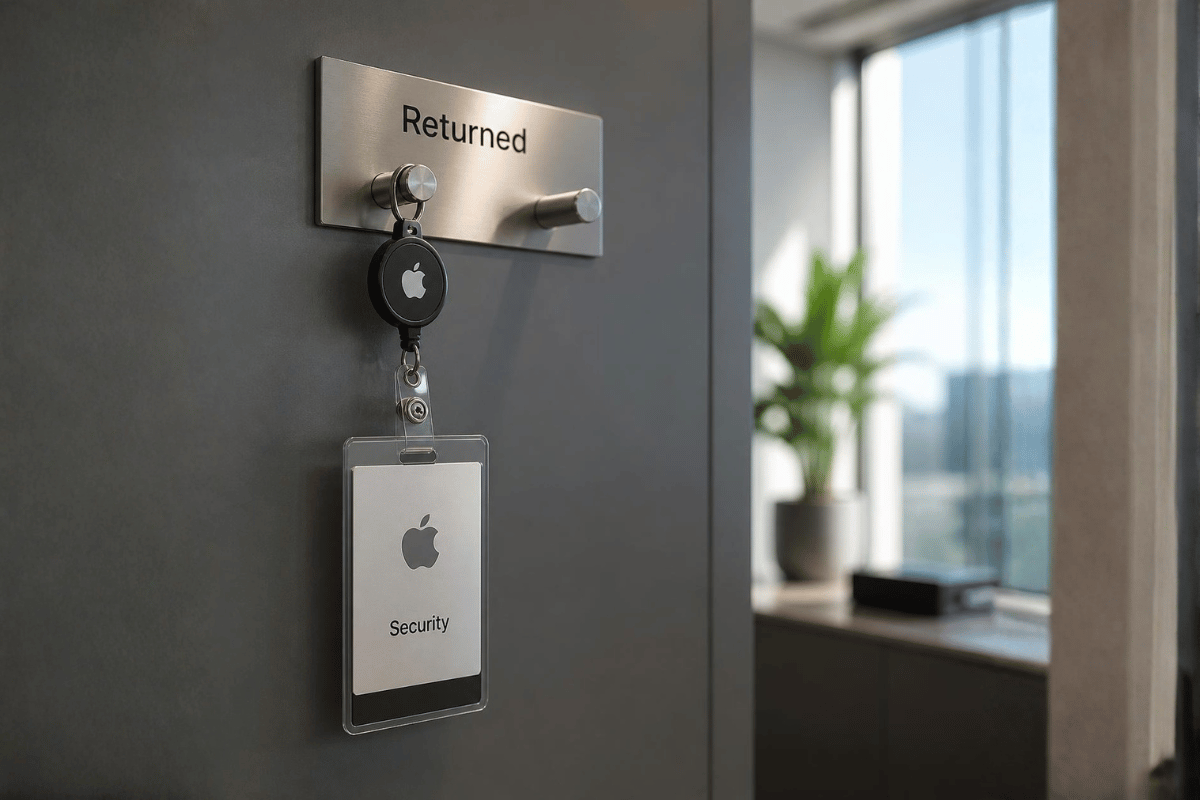
This week, Apple marched into federal court with a 41-page complaint, claiming that OpenAI didn’t simply hire away some talented engineers—it allegedly hired away talented engineers who brought rather more than their résumés.
So, if there was ever any doubt that AI has entered its “everyone sues everyone” phase, Apple has helpfully removed it.
The complaint paints a picture of clandestine laptop access, mysterious authentication bugs, whispered conversations on encrypted messaging apps, interview “show and tell” sessions involving Apple hardware, and enough references to confidential project codenames to make Langley blush. Apple’s central allegation is that former employees systematically misappropriated trade secrets to accelerate OpenAI’s increasingly ambitious hardware plans. OpenAI, for its part, has yet to respond in court.
Naturally, nobody in technology can simply accuse someone of pinching a spreadsheet anymore. No, this is Silicon Valley, where everything has to be upgraded to a cinematic universe.
The Curious Case of the Apple Employee Who Never Really Left
Apple alleges one former engineer discovered he could still access Apple’s internal systems after leaving the company thanks to an authentication bug. Rather than reporting it, Apple claims he found the situation amusing, allegedly responding with “LOL” before downloading confidential engineering files while working at OpenAI.
Another allegation describes interviews where candidates were supposedly encouraged to discuss Apple’s internal projects in extraordinary detail—and, in some cases, even bring along physical components from Apple for “show and tell.” If true, it’s the first time “Can you walk us through your previous work?” has apparently been interpreted as “Please bring the props.”
The filing reserves particular attention for Tang Tan, Apple’s former vice-president of product design and now OpenAI’s chief hardware officer. Apple alleges Tan used insider knowledge of Apple’s unreleased projects during recruitment, coached departing employees on navigating Apple’s exit procedures, and helped build a hardware organization that benefited from Apple’s confidential information. Again, these remain allegations, but they’re the sort that guarantee lawyers will be billing by the minute for quite some time.
The lawsuit also offers a fascinating glimpse into just how seriously Apple treats secrecy. Anyone who’s ever wondered why Apple product launches feel like Vatican conclaves now has their answer. The complaint describes a labyrinth of confidentiality agreements, restricted access systems, supplier controls, internal code names and need-to-know procedures protecting what Apple calls some of the most valuable trade secrets in American business. Whether all of those protections worked as intended is, of course, now a matter before the courts.
Behind all the cloak-and-dagger drama lies a much bigger story about the race to build the next generation of AI hardware.
OpenAI has spent the past year assembling what amounts to an all-star team of former Apple hardware veterans following its acquisition of io and its increasingly public ambitions beyond software. Apple clearly believes that competition is fair—provided your competitors don’t allegedly leave carrying decades of proprietary know-how in their metaphorical back pockets.
Whether the evidence ultimately supports Apple’s claims is something discovery, and eventually the courts will have to determine. Complaints are one side’s version of events, not findings of fact. But as opening acts go, Apple has certainly chosen spectacle over subtlety.
And if this is merely the first filing, expect the discovery phase to be less “exchange of documents” and more “season finale.” Silicon Valley’s next blockbuster may not be a product launch after all—it might just be Exhibit A.
Also in IT News
New York’s AI Diet: No More Data Center Hyperscale Until Further Notice
New York Governor Kathy Hochul has signed an Executive Order imposing what the state calls the nation’s first moratorium on new hyperscale data centers while regulators work out whether the grid, water supply and local communities can cope with AI’s ever-expanding infrastructure demands. Apparently, someone in Albany looked at AI’s insatiable appetite for electricity and water and decided the cloud needed grounding.
This isn’t quite a “no data centres allowed” sign. Existing projects can continue, while new facilities consuming 50MW or more will largely sit in regulatory limbo pending a statewide environmental review. The order argues that data centres create relatively few permanent jobs compared with their enormous appetite for electricity, water and industrial land, leaving communities to shoulder much of the burden.
To soften the blow, New York has also proposed a Community Investment Framework that effectively says: if you’re going to plug into half the county’s power supply, you’d better leave something behind besides warm server racks. Developers are expected to contribute around $1 million per megawatt to community projects, from schools and broadband to parks, housing and water infrastructure.
The AI boom may be powered by GPUs, but in New York it’s about to discover its biggest bottleneck might just be democracy.
The Algorithm That Allegedly Chose Meta’s Layoffs
At Meta, former employees allege that layoff decisions that led to the firing of 8,000 people were effectively delegated to AI-driven ranking systems, with algorithms scoring workers before managers signed on the dotted line. Meta disputes the lawsuit, but the case raises an awkward question for the AI era: if a chatbot can’t legally fire you, can a spreadsheet with machine-learning ambitions?
The complaint states: “Meta used a constellation of internal artificial-intelligence systems—including a system referred to internally as “Metamate,” employee-trained “second-brain” agents, keystroke- and activity-monitoring data, AI-token-usage dashboards, and algorithmically assisted performance ranking and calibration—to score, rank, and select employees for inclusion on the list.”
For workers, it turns annual reviews into a game of Guess Who Judged You? Apparently, “human resources” may be entering its algorithmic phase—where your biggest office rival isn’t Karen from accounting, but a confidence score.
Social Media Has a Bedtime Now
Europe and the UK have apparently decided that bedtime should once again be enforced—this time by algorithm. Brussels is eyeing tougher child social media rules, while Britain wants default midnight-to-6 a.m. curfews and addictive features like infinite scroll switched off for 16- and 17-year-olds.
It’s a remarkable reversal for an industry that spent years convincing us endless scrolling was a feature, not a lifestyle. Teenagers, meanwhile, are expected to respond in the time-honored way by immediately learning how to change the default settings. Parents may finally get some sleep—assuming they aren’t still doomscrolling long after the kids have logged off.