

 When you buy through affiliate links in our content, we may earn a commission at no extra cost to you. Learn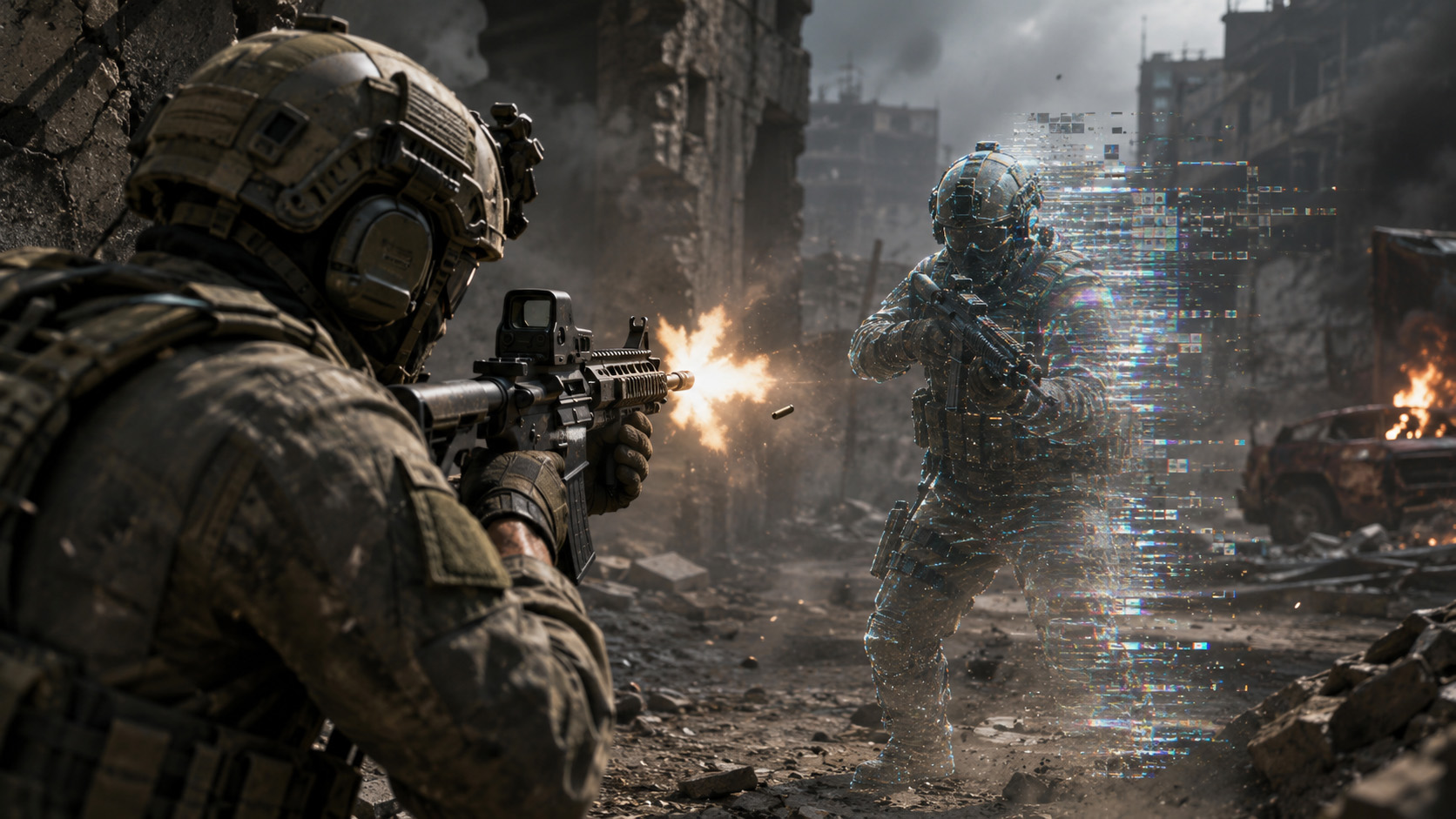
Call of Duty has been fighting cheaters for years, but the latest debate around Black Ops 7 and Warzone shows how much that battle has changed. This is no longer just about catching someone using an aimbot after they have ruined a lobby. Increasingly, it is about whether a PC can be trusted before a player even reaches the match, and that means giving over more access to your PC than you might like.
The latest flashpoint came after claims spread online that Call of Duty’s upgraded RICOCHET anti-cheat protections could be bypassed. PCGamesN reported that Activision responded by saying Microsoft had already fixed the relevant vulnerability, and that Microsoft Azure Attestation remains a key part of RICOCHET’s security system.
RICOCHET now uses remote attestation through Microsoft Azure to verify key PC security settings. In simpler terms, the game is not only checking locally whether a player has certain protections enabled. It uses Microsoft’s systems to help confirm that information from outside the player’s own machine. A remote attestation system is designed to make it harder for a tampered PC to pretend everything is fine.
For Call of Duty players, this means TPM 2.0 and Secure Boot have become part of everyday gaming life. TPM 2.0 is a hardware-backed security feature used to help verify system integrity, while Secure Boot helps ensure trusted software loads during startup. Activision says both are required for Black Ops 7 and Warzone, and players who do not meet the security requirements can be placed into separate matchmaking pools rather than joining the wider player base.
The Anti-Cheating Arms Race is Increasingly Intrusive
For years, anti-cheat was mostly discussed in terms of software running alongside a game: detection tools, ban waves, kernel-level drivers, reporting systems, and player behavior analysis. Those are still important, but the direction of travel is moving deeper into the system. The question now is not “is this player cheating?” but “do we trust this PC in the first place?”
There are good reasons for that. Cheats have become more sophisticated, more commercial, and more difficult to detect with simple tools. Popular competitive games now operate in an environment where cheating is its own industry, with paid subscriptions, customer support, hardware devices, spoofing tools, and constant updates designed to avoid detection. In that world, checking the game process alone may not be enough.
The player benefit is obvious if the system works. Fewer cheaters in public matches, better protection for ranked modes, and less reliance on players manually reporting suspicious behavior. Activision is also targeting unauthorized scripted input devices such as Cronus Zen and XIM Matrix, which shows the company is looking beyond traditional PC cheats and into hardware-assisted unfair play as well.
But there is also a trade-off. The more anti-cheat moves toward system-level trust, the more it affects ordinary players who have no intention of cheating. Some people may need to change BIOS settings, update firmware, convert old system configurations, or troubleshoot TPM and Secure Boot problems just to play a round of CoD. For Windows 11 users, many of these settings may already be enabled, but Windows 10 players and people with older or unusual PC builds can face more friction. Some older PCs don’t even have Secure Boot and can’t play next-gen shooters because of it. It also rules out playing on portable devices such as Steam Decks.
It also raises familiar concerns around transparency, false positives, hardware compatibility, and how much control a game should have over the environment it runs in — the environment you, in theory, own.
Opt-In Systems Could Soften the Privacy and Technology Issues
There is a possible middle ground, if intrusive anti-cheat measures are something players opt into, in return for protection from cheaters.
Activision’s two-stream matchmaking approach is one attempt to strike that balance. Players who fail Attestation checks are not necessarily banned outright, but their access is changed. They may be moved away from players whose systems meet the requirements and away from console players. That creates an incentive to comply without immediately treating every failed check as malicious.
Anti-cheat is now infrastructure. For a game as large as Call of Duty, fair play is not just a community management problem. It is tied to operating systems, cloud verification, account enforcement, hardware security, and platform trust. That makes the technology harder to explain to players, but also harder for publishers to ignore.
The recent bypass claims may have been shut down quickly, but the reaction shows how little confidence many players have in anti-cheat promises until they see results in matches. That is the real challenge for Activision. RICOCHET does not only need to be technically stronger. It needs to make players feel that Black Ops 7 and Warzone are worth taking seriously as competitive spaces.
Also in Gaming News
No Fakes Act Debate Puts Game Characters in the AI Likeness Fight
The ESA has warned that the proposed No Fakes Act could create legal uncertainty for video game companies if it does not clearly distinguish between harmful deepfakes and the digital replicas routinely used in game development.
The bill is intended to protect people from unauthorized AI-generated replicas of their voice or likeness. The problem, according to the Entertainment Software Association, is that games already rely heavily on digital versions of real performances, faces, bodies, and voices, often with consent and contracts in place.
ESA president and CEO Stanley Pierre-Louis raised the issue in a letter to Senators Chuck Grassley and Dick Durbin ahead of the bill’s scheduled June 11 markup. The trade body argues that the current wording risks blurring the line between abusive deepfakes and legitimate digital replicas used to create game characters, cinematics, sports titles, licensed likenesses, and performance capture.
Modern development uses facial scanning, motion capture, voice recording, photogrammetry, animation blending, AI-assisted tools, and digital doubles. A sports game may recreate hundreds of real athletes. A narrative game may scan an actor’s face and body, record their voice, and then use that data across cinematics, gameplay animations, patches, DLC, and sequels. Even when everything is authorized, the result can look very similar to what the law describes as a “digital replica.”
The No Fakes Act is trying to stop people from being copied without permission. The games industry is arguing that it must not accidentally make normal, licensed production pipelines more legally risky. If the definitions are too broad, studios and tool vendors could face uncertainty around character likenesses and how digital assets can be reused in the future.
The ESA’s warning should not be read as opposition to protecting people from deepfakes. It wants precision. A law that targets non-consensual AI replicas needs to be strong enough to deal with abuse, but clear enough that it does not treat a licensed game character, a sports roster, or a performance-captured NPC as if it were the same thing as a malicious fake.
Rules around digital likenesses will affect contracts, tools, voice work, sports licensing, remasters, sequels, and even how long studios can reuse captured performances.
Steam Gift Cards Are Being Phased Out Because Scammers Kept Adapting
Valve is phasing out physical Steam gift cards due to scammers constantly circumventing the protection systems around them.
According to reports, retailers will no longer be able to restock physical Steam gift cards once current supplies run out. Existing cards will still work, and digital gift cards are not going away, but the plastic cards hanging in shops are being retired. Valve has said scammers continued to affect Steam customers and other victims despite security measures and warning labels.
Valve’s decision also shows the limits of warning-based security. If scammers can adapt to packaging changes, checkout warnings, and retail restrictions, removing the physical product may be the cleaner option. It reduces one common route into fraud, even if it does not remove the problem entirely.
For ordinary Steam users, the impact should be limited. Digital gifting remains available, and redeemed physical cards will still be usable. The bigger change is a cultural one and a further shift away from giving physical gaming gifts.
Physical gift cards once made Steam feel more accessible to people without cards, bank accounts, or online payment methods. Their disappearance is another sign that gaming’s payment infrastructure is becoming more digital, more controlled, and more tightly linked to fraud prevention.
Path of Exile 2’s Martyr Moment Shows the Power of Shared Game Systems
A Path of Exile 2 player killing off their level 100 character sounds, at first, like the kind of thing only the most committed action RPG players could properly understand, but by doing so, one just wrote themselves into gaming folklore.
According to PC Gamer, the player, streamer Carn, found a mysterious chamber added as part of Path of Exile 2’s recent Return of the Ancients update. The game warned that entering would permanently destroy his character. This was not a throwaway alt, either. It was a level 100 character, which in Path of Exile terms represents a huge time investment. Carn went through with it anyway, losing access to the character and finding himself immortalized on the leaderboard as the “Martyr of the First Edict.”
When Carn returned with another character, he found a glowing orb where the chamber had been. Claiming it gave him an extra passive skill point. Eventually, players realized the sacrifice had not only rewarded Carn. It had unlocked a bonus for others playing in the same non-multiplayer server. A player on the regular version of the game later performed the same sacrifice, extending the reward to that broader audience.
Grinding Gear Games had built a secret that connected character permanence that may never have been found, knowing that if it was, it would create a ‘moment’. The result felt closer to an MMO world event than a standard action RPG secret, because it asked one player to give something up and then let others benefit from that choice.
That is difficult to do well because if the sacrifice is too small, it feels like a gimmick. If the reward is too large, it risks upsetting the balance. Here, the reward was useful but not game-breaking, and the discovery spread naturally through streams, social media, and the game’s own community.
For Path of Exile 2, this has brought new eyes to the game. It also gives players, new and old, a reason to believe that the world still has secrets worth finding.