

 When you buy through affiliate links in our content, we may earn a commission at no extra cost to you. Learn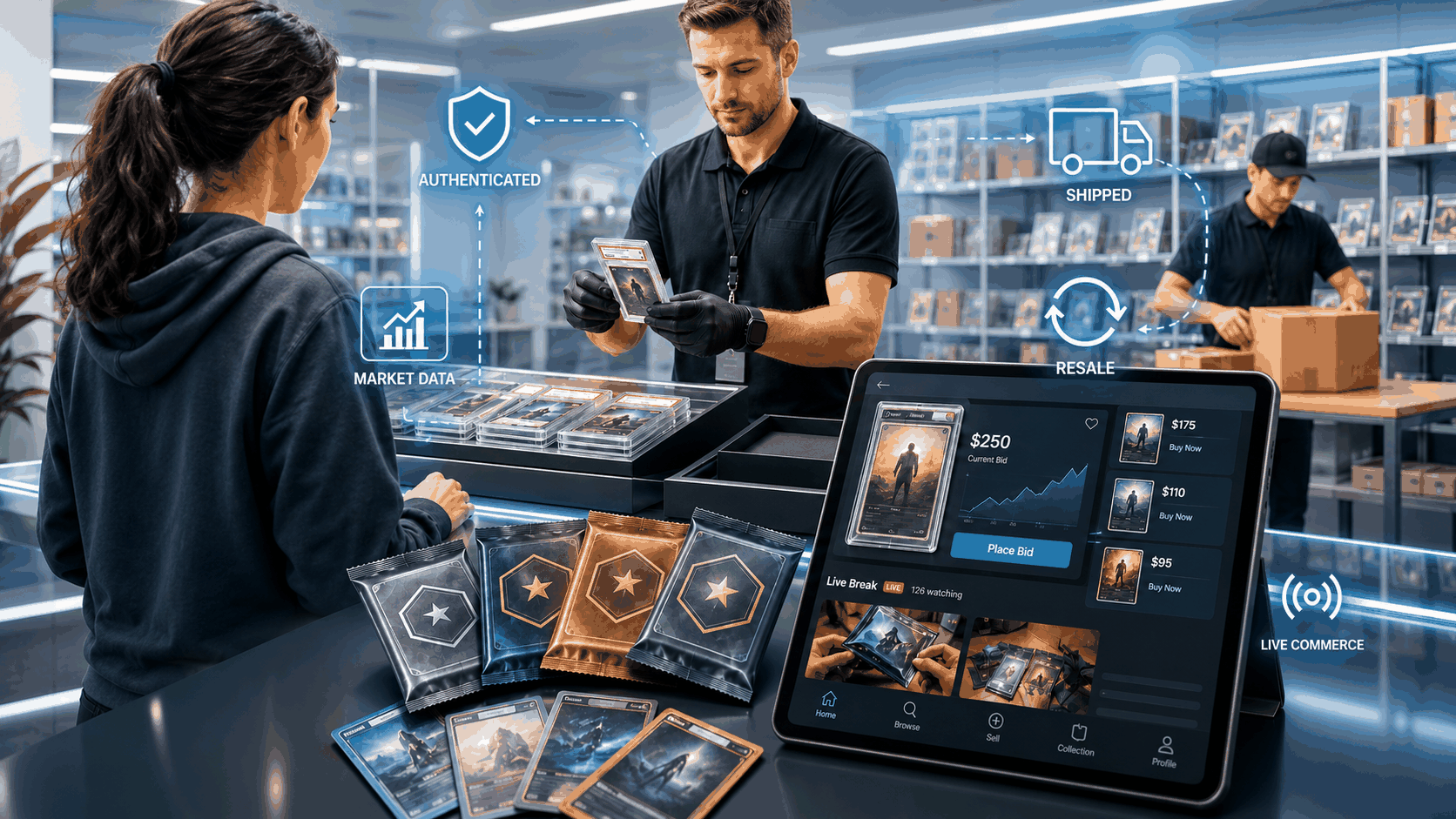
eBay has rejected GameStop’s unsolicited $55.5 billion takeover bid. In a statement on May 12, the company said GameStop’s offer was “neither credible nor attractive.”
GameStop had offered to buy the online marketplace for $125 per share in a half-cash, half-stock deal, saying its retail network would give eBay “a national network for authentication, intake, fulfillment, and live commerce.”
In its rejection letter, eBay made clear it wasn’t impressed with GameStop’s plan, poking holes in the company’s financing while also pointing out the risks of merging the two companies. eBay also questioned the proposed leadership structure.
GameStop came to the table with an ambitious takeover pitch, but what stands out from a tech perspective is how the company planned to use its roughly 1,600 stores as a physical infrastructure for eBay’s online marketplace.
The deal may be dead, but the idea behind that retail-network pitch is worth taking a closer look at, because it’s sure to come up again with other companies and in other contexts. In GameStop’s vision of the future, physical stores would help power the growing online market for collectibles. An online retail site like eBay’s might be the main interface with customers, but a retail chain could handle behind-the-scenes verification and logistics, as well as in-person delivery of the goods.
Alas, at least for now, the merger plan has hit a wall. However, it gives us a glimpse into where companies like GameStop think collectibles could be heading. It’s a model where the buying experience is digital, the item can be stored or resold before it ever arrives at the customer’s home, and physical locations serve as verification and logistics hubs for high-value goods.
GameStop’s eBay Pitch Was About More Than Buying a Marketplace
Speaking about the proposed takeover, GameStop CEO Ryan Cohen told The Wall Street Journal that eBay “could be a legit competitor to Amazon” under GameStop’s ownership. The retailer’s stores played a big role in what Cohen believed eBay could become if the two companies merged.
He told the Wall Street Journal that GameStop locations could collect and authenticate items from eBay sellers, while also arguing that eBay should be doing more around live commerce.
Cohen’s plan for eBay and GameStop would fit his company’s collectibles business especially well. That’s because trading cards, graded comics, rare games, and other high-value items don’t move as readily through online marketplaces as ordinary household goods.
Anyone buying one of these items wants proof that it’s authentic and has been properly graded. They’re also bidding on a particular copy of an item, which isn’t interchangeable with another in slightly different condition.
Sellers, on the other hand, want a smooth path from listing to shipment. GameStop’s proposal would have treated its physical stores as support hubs for eBay’s online marketplace, making them more than just retail destinations.
Hybrid Collectibles Businesses Are Still in the Cards
Even before GameStop approached eBay with its offer, the logic behind a partnership like this was already taking shape. Both companies are separately hard at work building products around authentication, valuation, and faster resale. That won’t stop just because they aren’t merging.
In its first-quarter 2026 results, eBay said its AI-powered card scanning feature had topped 30 million cumulative scans and expanded to cover its five most popular card game genres. The tool pulls historical pricing and population data from a photo, making it easier for collectors to identify and price their items.
eBay has also been investing in live shopping and recently extended its Authenticity Guarantee program to eligible trading cards in the U.K.
GameStop’s business has been moving in a similar direction from the retail side. Its customers can already drop off cards in its stores for Professional Sports Authenticator (PSA) grading. And in April, it launched Digital Power Packs, which let shoppers buy randomized online packs that reveal real PSA-graded trading cards stored in the PSA Vault.
After they’ve opened a pack online and revealed the card, they can keep it in the vault, ship it home, or sell it back instantly, without ever needing to take physical possession of it.
The now-rejected takeover bid wanted to bring those two paths together. eBay is adding more tools and services to its marketplace, where people already buy and sell collectibles, while GameStop is trying to turn its collectibles push into a more digital commerce experience.
And that’s where GameStop’s store-network argument gets even more interesting than the proposed merger itself. Its locations would have continued as retail stores, but they could’ve taken on a bigger role as handoff points, verification sites, fulfillment hubs, or staging grounds for live-selling events.
Although eBay has said no to the plan, GameStop’s brass may already be thinking about other potential partnerships or alternative paths to the same goal.
GameStop’s Power Packs Show the Interactive Future of Online Collecting
With Digital Power Packs, GameStop’s model for online collecting starts to feel more like playing a game—or, dare we say it, gambling—than browsing a traditional marketplace.
The mechanics are simple: customers choose a card category and a pack level, with prices starting at $25 and going up to $2,500. Each pack contains a real PSA-graded card. The higher the pack tier, the better a buyer’s chances are of scoring a high-value “chase” card. GameStop tells users they can ship the card home or “take the instant buyback and chase the next big hit.”
Power Packs aren’t quite the same as video game loot boxes, even if the purchasing experience feels similar. The crucial difference with GameStop’s Power Packs is that they confer ownership of a real graded card, not just a virtual item. It’s up to the player whether and when they want to take physical possession of the card, or leave it with GameStop for safekeeping. As with the failed eBay plan, GameStop’s chain of retail locations facilitates the process for those choosing physical ownership.
Despite those differences, the similarities to loot boxes stand out at a time when randomized digital purchases have faced increased scrutiny. In February, New York Attorney General Letitia James sued Valve over its loot box mechanics, alleging that players pay for a chance to receive valuable virtual items in a system that’s nothing more than illegal gambling.
The Federal Trade Commission’s 2025 settlement with the Genshin Impact developer, Cognosphere, also targeted loot box sales, requiring clearer disclosures about pricing and prize odds and restricting sales to younger teens without parental consent.
At this point, no one has formally accused GameStop of promoting illegal gambling through Power Packs, which launched to the general public on April 15. However, given the ability to trade prizes for cash to buy more packs, it’s not hard to imagine that backlash could be coming if the product catches on.
Power Packs also show how easily collectibles can take on the same mechanics as gambling products: suspense, variable outcomes, instant resale, and the urge to open one more pack. If that is part of the future GameStop sees for online collecting, the line between innovative commerce and gambling-adjacent design may only get harder to ignore.
In the end, the eBay-GameStop merger wasn’t meant to be. But the bigger idea behind it isn’t going away. eBay is adding more authentication, live shopping, and tools for collectors, while GameStop is turning card collecting into a more digital, more immediate, and at times more game-like experience.
GameStop’s bid failed, but the version of online collecting it pointed toward is already taking shape.