

 When you buy through affiliate links in our content, we may earn a commission at no extra cost to you. Learn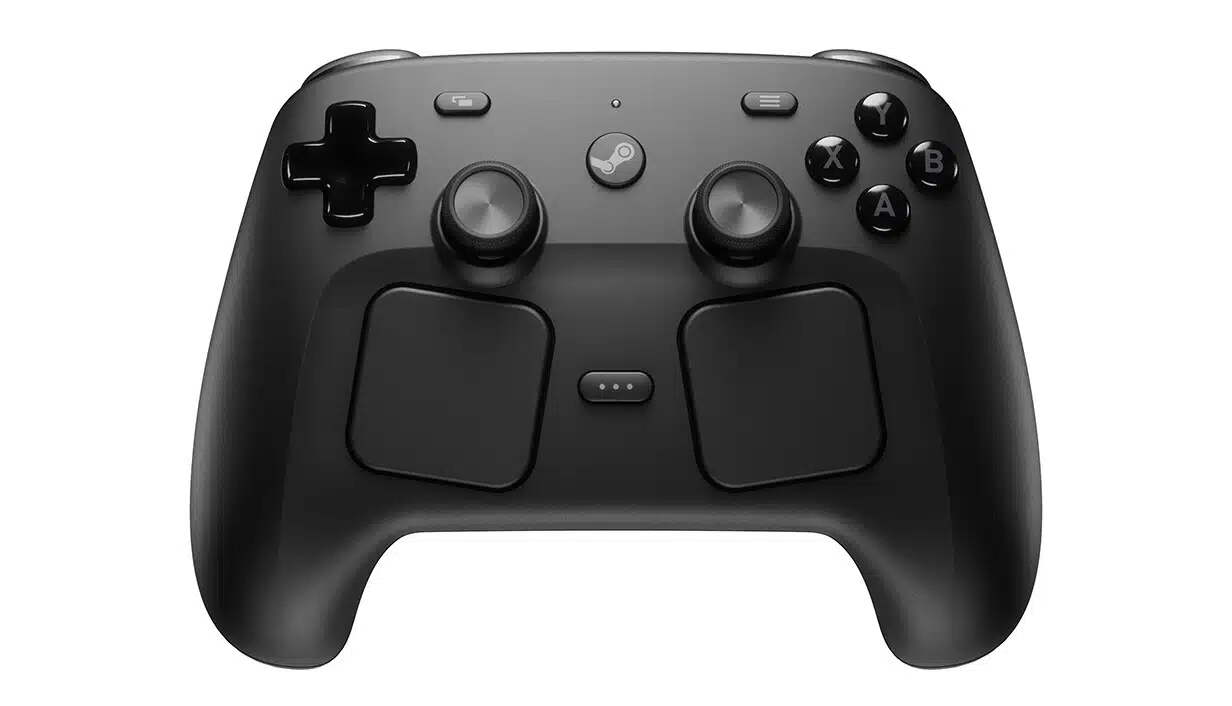
Valve’s new Steam Controller selling out almost immediately might look like a simple stock issue, but it points to something more important about where PC gaming hardware is heading.
The new controller launched on May 4 and sold out in around 30 minutes. This was quickly followed by scalped listings appearing on online auction sites for far above the retail price, with some listings reportedly reaching around $300.
eBay has a pre-sale policy that allows sellers to list items they don’t actually have in their possession, as long as they can fulfil the sale within 30 days of the auction closing. This opens up the possibility to list items and get a sale before you have paid for the pre-order.
Valve, to its credit, has since acknowledged the problem, saying stock of the Steam Controller ran out faster than it anticipated and that it is working on getting more units, with a timeline update expected soon. Expect the same to happen again though.
Valve continues to attempt to make Steam feel less tied to the desk and more comfortable in your living room. The original Steam Controller was an odd, ambitious bit of kit that tried to solve a real problem: making complex keyboard-and-mouse-based PC games playable from a sofa.
This newer version appears to be taking a more familiar route, familiar to those with a Steam Deck at least, by borrowing its input language and giving players a better way to interact with Steam on a big screen.
Valve Attempts to Change How We Play
The Steam Deck has already proved there is a market for PC gaming outside the traditional monitor, keyboard, and mouse setup. If Valve can make its Steam launcher and storefront feel natural on handhelds, TVs, and future Steam Machine-style hardware, it starts to look more like a full-fat gaming platform.
Demand for Valve hardware appears to be strong as ever, but the launch of the Steam Controller also exposed familiar weaknesses in the way we buy just about any in-demand item online in this day and age. A mix of limited stock, easy ordering, and scalpers moving faster than ordinary buyers looking to make a killing at the expense of anybody who wants one for real.
GamesHub noted that the Steam Deck reservation system had at least some deterrents, including a small pre-purchase fee and a queue-based model. By comparison, this controller launch appears to have given resellers far more room to operate.
For players, the immediate issue is obvious: they either wait for more stock or find themselves stuck paying inflated resale prices. For Valve, the bigger challenge is trust. Hardware launches are now judged not only by the product itself, but by whether real customers can actually buy one. That becomes especially important if Valve is preparing more living room-focused hardware, because enthusiasm can quickly turn into irritation if every new device becomes another checkout lottery.
Valve has shown there is still appetite for Steam-branded devices; however, this first launch is the simplest of the three pieces of hardware it has planned, with the Steam Machine and Steam Frame VR kit requiring supply chain issues of components to be solved in order to keep the price acceptable to the masses.
Also in Gaming News
Xbox’s New Boot Animation Hints at a Faster-Moving Console UI
Xbox consoles are getting a new boot animation, which might sound like the smallest possible update until it is put in the wider context of what Microsoft is trying to do with the platform and keeping in the minds of players.
According to Thurrott, the new animation features the glowing green Xbox logo Microsoft has started using recently and is expected to roll out to consoles next week. The change follows comments from new Xbox CEO Asha Sharma, who said she had formed a team focused on shipping new console features inspired by fan feedback, while acknowledging that Xbox needs to move faster to compete with the PlayStation and Switch 2.
A boot animation will not change how anyone plays games, but it is part of the console’s daily user experience and has been iconic since the original Xbox machine.
Microsoft is also testing sharper gamerpics and higher-quality game and achievement art on Xbox Series X consoles set to 4K output. Again, a minor update to bring the console up to date rather than a groundbreaker, but some might say it is polish that has been severely lacking through recent troubled times.
Neverness to Everness Shows Why AI Disclosure Is Becoming a Gaming Tech Problem
The backlash around Neverness to Everness is not just another argument about a gacha game and whether or not veiled gambling mechanics are predatory. It is another sign that generative AI has become a trust issue for game studios, creators, and the people tasked with promoting their work.
According to GameSpot, streamers and voice actors have begun to distance themselves from Hotta Studio’s new game after players flagged assets they believe may have been created with generative AI. Reported examples include visual artifacting, an in-game billboard allegedly resembling altered anime material, and claims about an AI-generated anime short inside the game.
The gripe here is disclosure. Generative AI is already being used across art, dialogue, voice, localization, and production pipelines, but many audiences and collaborators increasingly want to know when it is involved.
Live-service titles rely on long-term trust from players, streamers, artists, and actors. If people believe AI tools are being hidden or trained on work without permission, the technical shortcut can quickly become a reputational problem, as Neverness to Everness has found out to its cost.
A further issue, however, is that it is rapidly becoming possible to damage a game’s reputation by merely shouting “AI Slop!” on a subreddit, based on hunches.
007 First Light’s Day One Patch Shows Physical Games Are Becoming Less Physical
The 007 First Light day one patch issue is another reminder that buying a disc no longer always means owning a playable copy of a game in the traditional sense.
IO Interactive confirmed during a technical deep dive that physical copies of 007 First Light will require a day-one patch before the game can be played offline. Without installing that update, the disc is reportedly unplayable, which has already led to complaints and some physical pre-order cancellations from players.
The technology question here is not just about patch size. It is about how modern games are assembled, authenticated, updated, and preserved. Sometimes discs ship with incomplete data because the final build is too large, unfinished, or tied to online checks and platform systems. Masters are sent to duplication considerably before the developers may have finished the final polishing stages of a game.
For players who buy physical games because they want long-term access, that creates an obvious problem: the disc becomes more like a license token than a self-contained product, in much the same way some Nintendo games come with a download code only on the package. A mandatory day one patch may be routine for publishers, but for collectors and offline players, it raises a blunt question: what exactly are you buying, and will you be able to play it far into the future?