

 When you buy through affiliate links in our content, we may earn a commission at no extra cost to you. Learn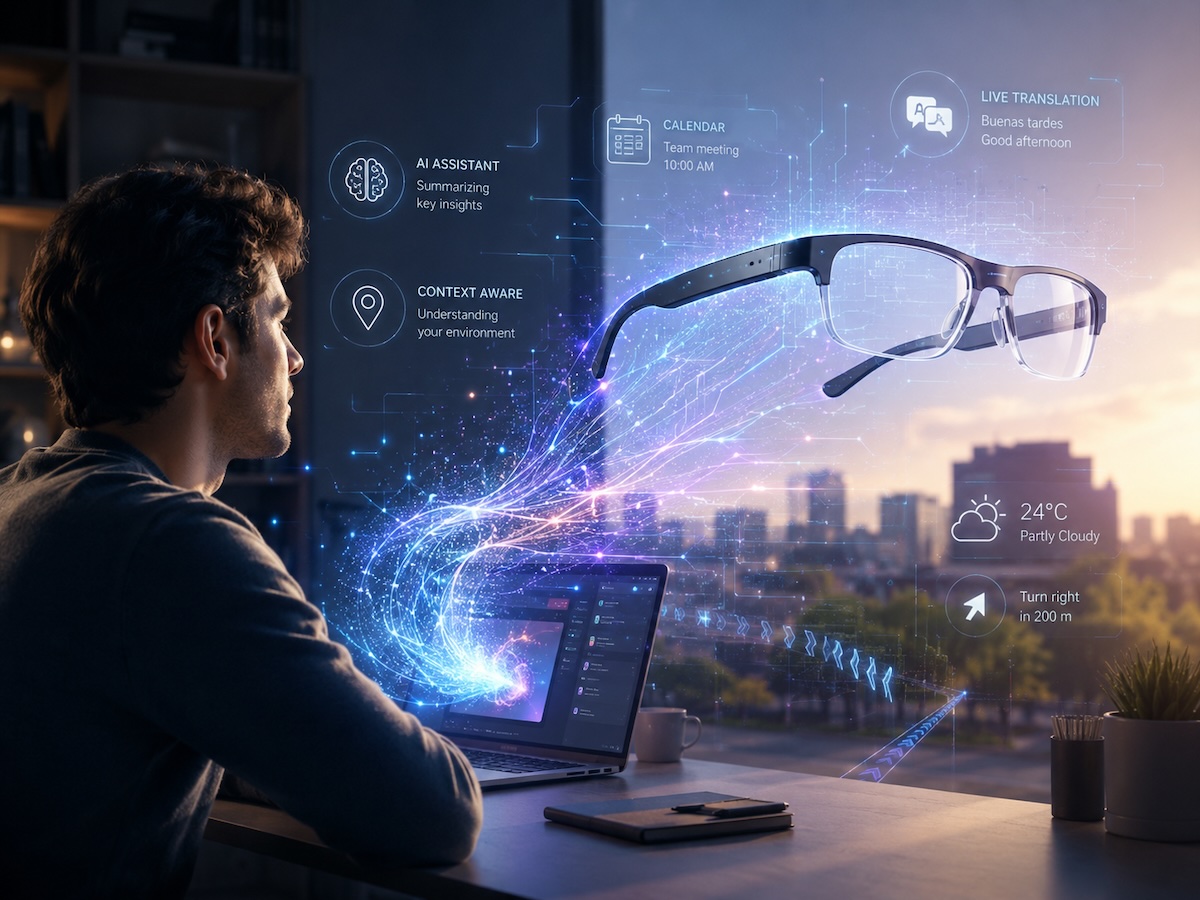
Snap wants to turn smart glasses into the next everyday computing device, and its new Specs are another example of how determined tech companies are to move AI beyond our phones and computers.
The company announced Specs on June 16, describing them as a wearable computer built into see-through augmented reality glasses.
They’re available for preorder at an eye-watering price of $2,195, with a $200 refundable deposit, putting them in the same price range as some entry-level MacBook Pro configurations.
Snap expects to begin shipping Specs this fall in the United States, the United Kingdom, and France. Specs’ high price makes it almost certain the glasses won’t become a mass-market gadget, at least not anytime soon.
Still, they show what Snap, Meta, Google, Samsung, Xreal, and others seem to be chasing with this new technology. The end goal is to create a pair of glasses that can see the world, understand context, and display digital information without sending users back to a phone screen.
In Snap’s announcement, CEO Evan Spiegel called Specs “the beginning of a new era in computing.” He added, “Specs put computing into the world, where life actually happens.”
And that’s exactly what Snap is betting on: that its AI-powered AR glasses give it an early lead in a post-smartphone device race that is only just getting started.
Snap Wants Specs to Sit Between AI Glasses and Headsets
In its announcement, Snap points out the flaws in the current generation of AI glasses and explains how Specs can fill the gap.
Snap says that today’s AI glasses may be easy to wear, but they are limited in what they can do. The company says headsets have the opposite problem: They’re more powerful than AI glasses, but they can be uncomfortable and act as a barrier between the wearer and the real world.
In contrast, Specs is a fully standalone device with no puck or tether and runs on two Snapdragon processors: one handles computer vision, while the other runs Snap’s Lenses, the company says.
The hardware includes a 51-degree field of view, 16 million colors, hand tracking, contextual AI assistance, Bluetooth notifications, and a private display for streaming, screen casting, whiteboarding, and work tasks.
Snap says Specs offer up to four hours of mixed-use battery life, with a charging case that provides four additional charges for up to 20 total hours of use.
‘Lightweight’ is Relative
While the company markets Specs as lightweight, they’re still pretty heavy by eyewear standards. Snap says the 47 mm model weighs in at 132 grams, while the 52 mm model tips the scales at 136 grams.
That makes them much heavier than Ray-Ban Meta glasses, but they’re still lighter and less isolating than a full mixed-reality headset.
Occupying that middle ground may create an opportunity for Snap. Camera-first smart glasses are easier to wear, but they don’t give users an immersive augmented reality experience. Headsets, like the Meta Quest VR, give users a richer spatial experience, but most people aren’t going to wear a large device over their faces while doing everyday tasks.
Snap thinks there’s a market for a device that can put AR visuals, AI tools, and app-like experiences into a pair of glasses.
The problem for Snap is that Specs cost much more than Meta’s smart glasses, and Apple’s Vision Pro failure has already shown how hard it can be to get the public to buy into an expensive spatial computing device.
The Smart Glasses Race Is Getting Crowded
The smart glasses market Snap is entering today looks a lot different from the one Google Glass struggled to define more than a decade ago.
So far, Meta has made the strongest case for smart glasses as everyday tech with its Ray-Ban and Oakley-branded AI glasses. While these glasses don’t offer full AR overlays, they’ve helped normalize camera-equipped eyewear by pairing well-known frames with easy-to-use features like photo capture, video recording, audio playback, and Meta AI.
Google and Samsung are taking a similar path with Android XR. In May, Samsung and Google announced new intelligent eyewear created with Gentle Monster and Warby Parker. The companies said the glasses are designed to be a phone companion and will let users access Gemini by voice, receive navigation help, translate menus and signs, capture photos, and manage notifications without pulling out a phone.
Xreal is also trying to make its mark in the category with its Google-backed Aura XR glasses, which can be reserved pre-launch for $99. Xreal says Aura will include Gemini support, a 70-degree optical see-through display, and a lightweight glasses-style design. The glasses are expected to launch in fall 2026 and run on Android XR.
With all of the competition pushing to get its devices out, it makes sense that Snap is moving on Specs now. If glasses really do become the next important interface, the companies that control the operating system, assistant, developer tools, display hardware, and app ecosystem will be in a very powerful position.
New Niche Could Mean New Trend-Setters
Phones are what gave Apple and Google control over much of modern mobile computing. Glasses give Snap a chance to compete for a new interface before the winners are decided.
Snap has been moving towards this moment for years. The company says it has invested across developer tools, a proprietary operating system, displays, optics, and computer vision, and has filed more than 7,000 patents related to its AR work. It also said developers have already published hundreds of Lenses for Specs.
The developer piece is important for any company that hopes to lead in this space. Shiny new hardware can attract a lot of attention, but useful software is what creates habits and gets users to identify with one device over another. Snap knows this and is trying to get out in front of the competition before it’s too late.
Specs Are an Early Sign of Where AI Hardware Is Going
The price, weight, and battery life of Specs make it unlikely these glasses will be an immediate mainstream hit.
Snap is also facing a difficult business backdrop, with Reuters reporting that its CEO defended the company’s investment in Specs after “activist investor demands to shut down or spin off the cash-burning unit behind the device.”
Even with that complicated picture, the launch of Specs shows AI’s next phase won’t be confined to phones, laptops, and chat windows. Tech companies want AI to become visual, spatial, and wearable.
This version of the specs may not find much of an audience beyond developers, creators, and early adopters, but it does show the direction the industry is moving towards.
If Specs are any indication of what lies ahead, the smart glasses race is shifting from who can put better cameras or assistants into glasses to who can turn them into a computing platform. We may be entering an era of glasses as computing devices that sit between users and the physical world.