


 When you buy through affiliate links in our content, we may earn a commission at no extra cost to you. Learn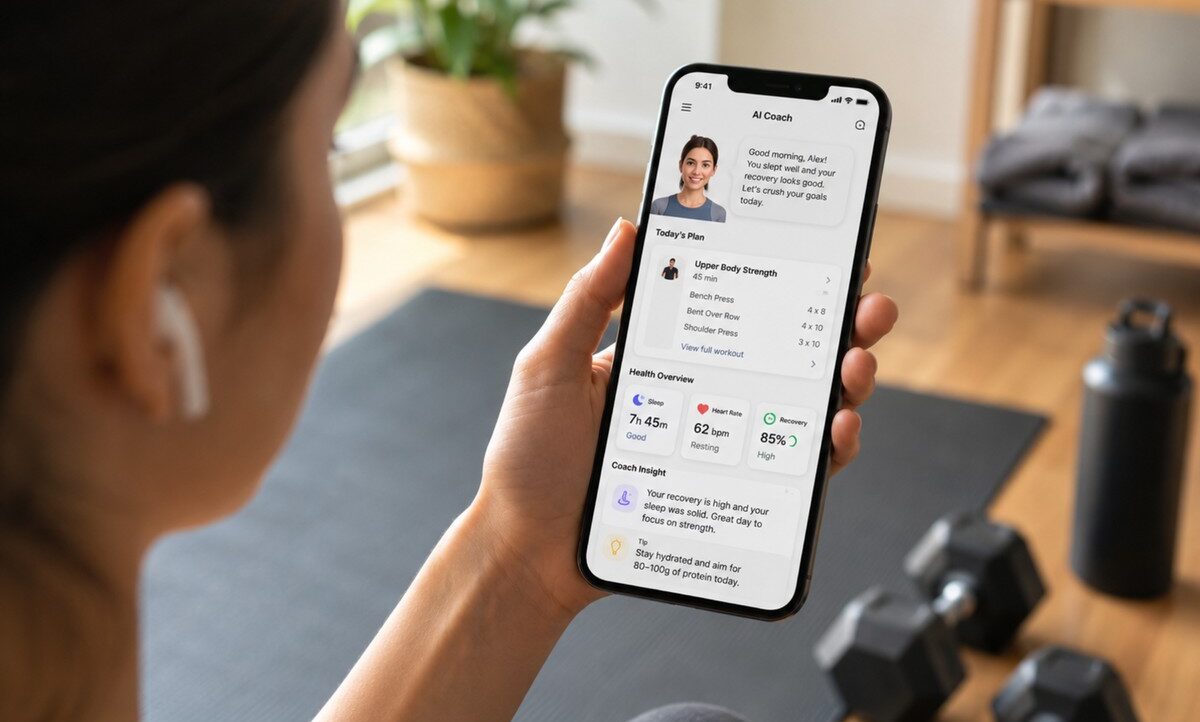
On May 19, the Fitbit app will become a thing of the past as Google Health takes over as the new home for the company’s fitness and wellness tools.
The move comes five years after the tech giant acquired Fitbit for $2.1 billlion. Google is making the transition easy for existing customers, deploying Google Health as an update and rebranding of the existing app. It has assured users that their Fitbit data will migrate automatically.
Still, longtime Fitbit owners will need to adjust to a new layout. Google Health will organize downloaded data into four tabs: Today, Fitness, Sleep, and Health. Third-party app and device integration will work through Health Connect, Apple Health, and Google Health APIs. U.S. users will also be able to sync their medical records to the app.
One perk of the new app is an AI-powered coaching for paying users. Google has set out to do much more with data than just step counts, sleep scores, and workout summaries.
Google Health Coach is a Gemini-powered personal trainer, available to Premium subscribers worldwide after it moves out of public beta on May 19.
According to Google, the coach will use information users share, such as fitness and sleep metrics, nutrition and cycle tracking, local weather, location context, and personal medical records, to provide more personalized guidance.
With that information, Google says its coach can do things like offer workout suggestions, help users create custom workouts with natural language, explain sleep consistency, summarize health records, and nudge users to keep them motivated and on track.
A subscription to Google Health Premium will cost $9.99 per month or $99 per year. However, if you already subscribe to one of Google’s higher-tier AI plans, Google AI Pro or Google AI Ultra, you’ll get Google Health Premium at no additional cost.
Google Is Moving Fitbit From Tracking to Interpretation
Google’s decision to integrate Fitbit even deeper into its ecosystem will come as no surprise to longtime users of the popular fitness tracker. Following the 2021 acquisition of Fitbit, it said the deal would allow it to combine Fitbit’s health and wellness technology with Google’s AI, software, and hardware. Although it took a while to make good on that promise, the day has now arrived.
The vision Google has laid out for Fitbit goes quite a bit beyond that of the original compnay. What made Fitbit so popular was that it made data easy to collect. However, users were left to make sense of a lot of that data on their own. A glance at the device or its app would present numbers about sleep time, steps taken, heart rate, estimated calories burned, and workouts completed. What that all meant was up to the user to decide.
Google is positioning the new app and its AI coach as the technologies that will change that. It aims to act as an interpreter, connecting the dots between the data points and delivering suggestions tailored to each user. Instead of asking the users to figure out what a poor night’s sleep, a menstrual cycle phase, a readiness score, and the day’s weather mean for their next workout, Google wants Health Coach to do more of that thinking for them.
This overhaul could make wearable data more useful for people who like tracking this information but don’t always know what to do with it or how to act on it. However, it raises a litany of privacy concerns, as well as raising the stakes for accuracy and trust.
Google does have a disclaimer that says its AI answers may be inaccurate or incomplete and says Google Health isn’t meant to diagnose, treat, cure, prevent, or monitor disease. Still, as we’ve seen with AI chatbots, a disclaimer is one thing; how people choose to treat the information they get from it is another. There’s always a chance that people will forget they’re dealing with a bot and put more trust in the data Google delivers to them via the health app than they should.
There’s a good chance the Google Health Coach will make Fitbit feel less like a logbook and more like a daily adviser, but users will have to remember that health advice based on AI shouldn’t be taken as the final word on things.
Also in Consumer Tech News
Apple’s Camera-Equipped AirPods Reportedly Move Closer to Production
According to a report from Bloomberg, Apple’s rumored camera-equipped AirPods are now in the advanced testing stage. The cameras aren’t designed for taking traditional photos or videos. Instead, they’ll help the earbuds understand the wearer’s surroundings and power AI features.
By the looks of things, these AirPods are part of Apple’s push into the world of wearable AI, as companies race to come up with ways to make the technology useful beyond phones and chatbots.
Netflix Is Testing AI-Powered Voice Search
Netflix is testing a new search experience that lets some iPhone and iPad users look for movies and shows using natural-language prompts based on their “moods and tastes.” In a post on its website, the streaming giant describes the new search method as “similar to how you’d ask a friend for a recommendation.”
As The Verge notes in its report on the new feature, it keeps users inside the Netflix app, eliminating the need to use their smart TV’s universal voice assistant or a device like the Amazon Fire TV Stick. And that’s exactly what Netflix wants: users to stay in its app, watching the shows it recommends, instead of switching to Prime Video, Disney+, or another streaming service.
ChatGPT Adds a Trusted Contact Safety Feature
On May 7, OpenAI announced it had added Trusted Contact to its platform. The feature allows adult users to designate someone who can be notified if the chatbot detects that a user is at risk for self-harm.
The new feature comes as ChatGPT and other AI chatbots have come under scrutiny for allegedly encouraging users to commit suicide. One lawsuit filed against AI alleges ChatGPT acted as a “suicide coach” in the death of a 40-year-old Colorado man.
OpenAI says its Trusted Contact feature is designed to connect users with real-world support but doesn’t replace professional care or crisis services. The feature shows that AI companies may finally be moving beyond on-screen warnings toward more direct intervention systems.
Microsoft Edge Password Storage Raises Security Concerns
Security researcher Tom Jøran Sønstebyseter Rønning announced on X on May 4 that he’d discovered a flaw in Microsoft Edge that loads saved passwords into memory in plaintext when the browser opens.
According to reporting from Proton, the issue affects passwords saved in Edge’s built-in password manager, even for websites users don’t visit in the current session. The finding is another reminder that while browser-based password managers may make our lives easier, they can also create risks if a device or user session is compromised.