

 When you buy through affiliate links in our content, we may earn a commission at no extra cost to you. Learn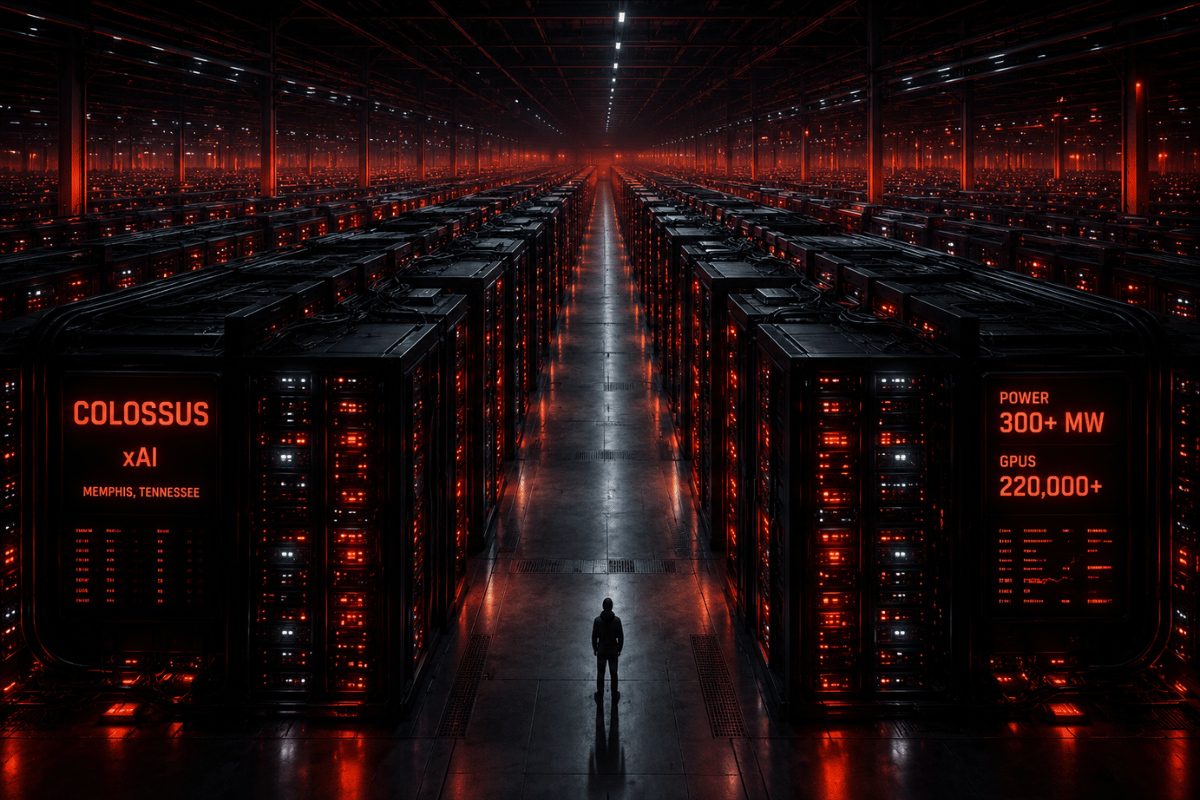
Anthropic appears to have decided that when it comes to artificial intelligence infrastructure, moderation is for people without huge sums to spend.
New disclosures buried inside a recent SpaceX S-1 filing reveal the AI company is committing nearly $45 billion over the next three years to computing infrastructure tied to Elon Musk’s xAI and SpaceX operations.
That works out to spending nearly $1.25 billion per month just to rent computational capacity. That’s an amount of money large enough to make even Nvidia sweat.
An Anthropic spokesperson confirmed to Techopedia that the figures disclosed in the filing are accurate. The spokesperson also pointed to recent comments from Anthropic co-founder and Chief Compute Officer Tom Brown discussing the company’s expanding relationship with SpaceX.
“We’re expanding our partnership with @SpaceX, and will be scaling up on GB200 capacity in Colossus 2 throughout June.
“Appreciate @elonmusk and the team helping us find good homes for the Claudes.”
Apparently, “good homes” now come with hundreds of thousands of GPUs and enough electricity consumption to power small cities.
Like moths to an artificial intelligence flame, researchers, analysts, infrastructure nerds, and anyone fascinated by the increasingly absurd economics of the generative AI arms race came flying in. Because while Silicon Valley spent the past few years telling the public the future was about algorithms, it turns out the real battle may simply be over who can hoard the most chips before everyone else does.
Anthropic’s Colossus Expansion Deepens Musk’s Grip on the AI Sector
Matthew Sigel, Head of Digital Assets Research at VanEck, said the filing revealed a much deeper Anthropic-SpaceX relationship than previously understood.
“$SPCX S-1 reveals that the scope of their Anthropic relationship is far larger than previously understood and may carry the highest implied monetization density ever disclosed for a large-scale AI infrastructure deployment,” Sigel wrote on X.
Sigel added that Anthropic secured access to more than 300 megawatts of power and around 220,000 GPUs across Colossus I and II. He also noted the pricing appeared eye-wateringly expensive by historical cloud infrastructure standards.
“ChatGPT called it: ‘wartime procurement pricing.’”
That description feels increasingly accurate. AI companies are no longer investing in processor cycles so much as panic-buying what they can before their rivals clear the shelves.
Wartime Pricing and the Billion-Dollar AI Compute Scramble
The agreement lands as major AI firms scramble for access to Nvidia’s newest GB200 systems and enough data center capacity to keep increasingly power-hungry models online. Anthropic’s Claude platform has scaled exponentially across enterprise software, coding tools, research products, and productivity services, all of which require staggering amounts of inference capacity.
Brown previously hinted at the sheer operational scale involved while discussing Anthropic’s use of xAI’s Colossus infrastructure.
“In the next few days, we’ll be ramping up Claude inference on Colossus.
“Grateful to be partnering with SpaceX here. We are going to need to move a lot of atoms in order to keep up with AI demand, and there’s nobody better at quickly moving atoms (on or off planet Earth),” he wrote earlier this month on X, adding: “Let the tokens flow.”
For anyone keeping score at home, “moving atoms” is now apparently executive shorthand for “burning through unimaginable amounts of money to keep chatbots responsive.”
The Colossus project, operated by Musk’s xAI in Memphis, Tennessee, has become one of the world’s largest known AI compute clusters as Musk races against rivals including OpenAI, Google, Meta, and Anthropic itself.
The timing is also difficult to ignore. Ahead of SpaceX’s expected IPO next month and now OpenAI’s potential IPO, the deal further cements Musk as one of the AI economy’s most influential infrastructure gatekeepers, setting him up to potentially become a trillionaire. Through xAI, SpaceX, and associated compute operations, Musk increasingly controls exactly the thing every frontier AI company desperately needs more of: gigantic piles of GPUs connected to equally gigantic amounts of electricity.
Some observers are beginning to wonder whether AI development is quietly becoming less of a software competition and more of a capital endurance sport.
Gary Marcus, the American psychologist and cognitive scientist behind the book Taming Silicon Valley: How We Can Ensure That AI Works for Us, pointed to another detail hidden inside the economics of the arrangement.
“Always read the fine print: Anthropic is projecting its first (slightly) profitable quarter ever, which is amazing—assuming it actually happens—but if it does, it will be in no small part because they are getting a one-time (nonrecurring) discount for that quarter on compute from SpaceX.”
Marcus added that the temporary discount may itself exceed Anthropic’s projected quarterly profit.
Meanwhile, smaller infrastructure providers quickly seized on the disclosure as proof that the AI industry’s spending habits have officially entered “numbers no longer feel real” territory.
Decentralized compute platform io.net reacted by pointing out that Anthropic’s annual compute bill could theoretically fund infrastructure for tens of thousands of startups.
“$15 billion per year.
“That’s what @AnthropicAI is paying SpaceX for compute.
“That is enough money to pay for the compute needs of over 25,000 startups.”
Naturally, io.net also suggested its own platform might offer slightly more affordable alternatives. Silicon Valley remains nothing if not opportunistic.
The wider AI sector has already been wrestling with growing concerns around infrastructure concentration, commercialization, and corporate control. Legal disputes involving Musk and OpenAI, alongside intensifying debates over AI governance and cybersecurity risks, have only amplified scrutiny around how aggressively major firms are scaling advanced systems.
Anthropic has long positioned itself as a safety-focused AI company stressing constitutional AI and responsible deployment practices. But the SpaceX filing offers a blunt reminder that even the industry’s more cautious players now require infrastructure budgets that resemble the GDP of medium-sized nations just to remain competitive.