

 When you buy through affiliate links in our content, we may earn a commission at no extra cost to you. Learn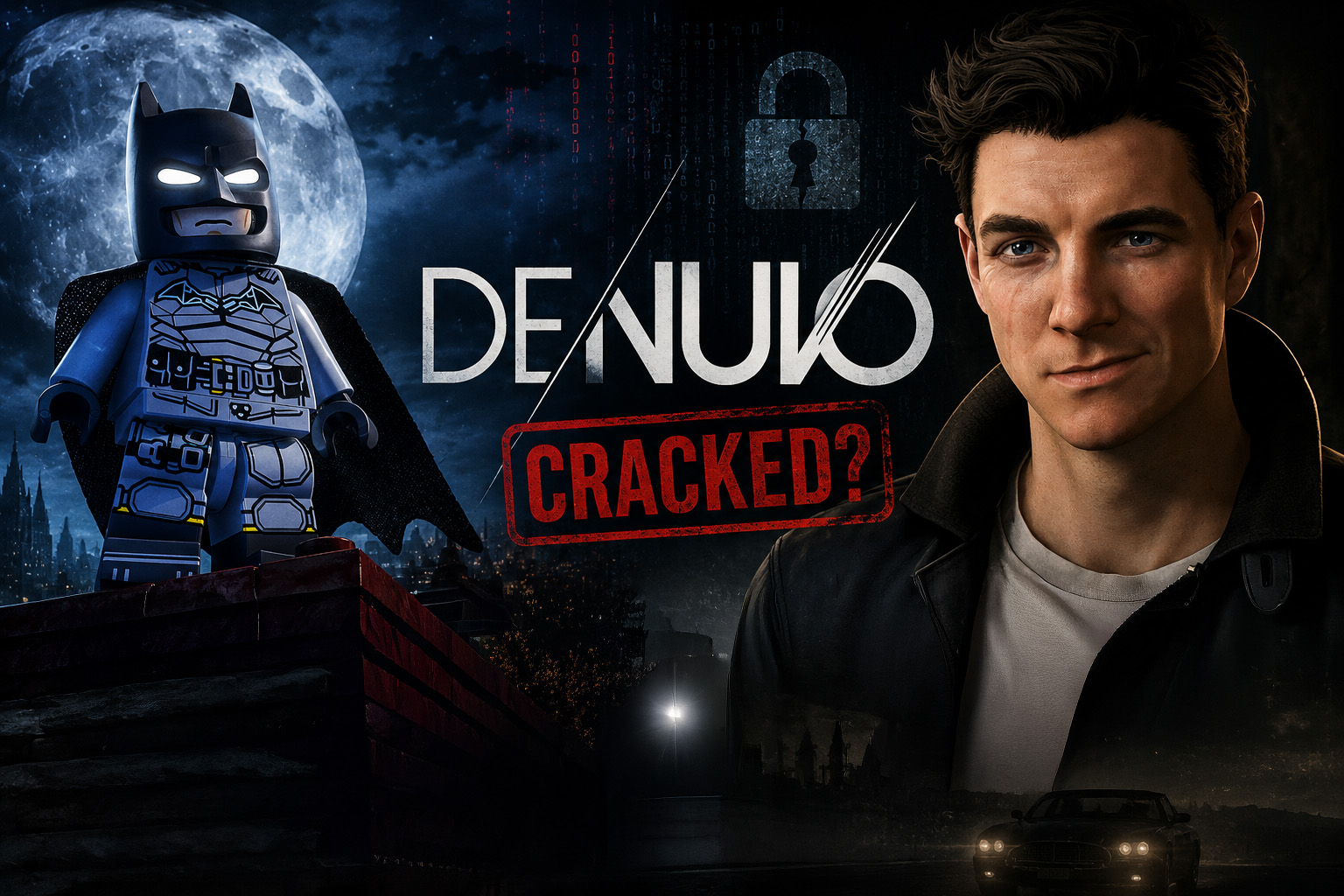
For years, Irdeto’s Denuvo has been a controversial staple of the PC gaming landscape, but a day-one crack of the latest LEGO Batman game makes it look newly vulnerable.
Publishers love Denuvo and similar technologies because they mitigate revenue loss to piracy. However, players have always hated such measures, claiming they hurt games’ performance and punish legitimate consumers. Neither side has much inclination to budge from its position, making anti-tamper middlewear an evergreen point of debate and frustration in gaming.
Now, though, the entire conversation may be changing, all in the space of a few short days.
This week, LEGO Batman: Legacy of the Dark Knight became the latest major PC release to reportedly fall to crackers almost immediately after launch, despite using Denuvo protection. Multiple outlets and community reports claim the game was bypassed or cracked within hours of release, making it one of the fastest high-profile Denuvo defeats of 2026 so far.
That alone would have been enough to reignite the never-ending DRM argument online, but the timing could not have been worse for IO Interactive and its upcoming, highly anticipated James Bond game, 007 First Light.
Just days before launch, players discovered that Denuvo had quietly been added to the Steam version of the game after pre-orders had already been live for months. The backlash was immediate, with angry fans on Reddit and Steam accusing the studio of sneaking the DRM in at the last minute to avoid affecting pre-order sales.
Some players openly announced they had asked for refunds, while others claimed they would now wait to see whether the game also gets cracked early before deciding to buy. That, in itself, highlights the strange place Denuvo now occupies in PC gaming culture. Once viewed as near-unbreakable protection capable of locking games down for months, if not for eternity, its exposed vulnerability in the past few months has been stark.
The worst case for a publisher, of course, is if the DRM simultaneously fails to do its job and proves sufficiently irksome for players as to hurt sales or even drive players to look for pirated copies.
Poster Child For DRM
Denuvo first appeared in 2014 and quickly became the preferred anti-piracy solution for AAA publishers. Its pitch was simple: protect the critical launch window where most sales happen. Even delaying piracy by a few weeks could potentially preserve millions in revenue.
And, to be fair, there is evidence that it works. A 2024 academic study analysing PC game sales found that games cracked within their first week could suffer revenue losses of around 20%, while titles protected for longer saw dramatically reduced impact from piracy.
That financial reality is why publishers continue to use it despite the controversy.
The problem is that players have never really accepted Denuvo. Over the years, it has been blamed for everything from stuttering and longer loading times to increased CPU usage and always-online style authentication headaches, especially if you like to play games on something like a Steam Deck. Whether every accusation is accurate remains debatable, but the reputational damage stuck.
Some developers have even taken to removing Denuvo a few months after launch, seemingly acknowledging that the goodwill cost outweighs the anti-piracy benefit once the immediate post-launch window has passed. It has been reported that the software is licensed out on a subscription basis, so publishers may also be saving money by canceling once they think the danger has passed.
What makes the latest wave of anti-Denuvo activity different is the rise of hypervisor-based bypass methods and increasingly sophisticated cracking techniques. Earlier this year, reports began circulating that newer methods were sidestepping Denuvo’s protections far faster than before, leading to growing concern that the cat-and-mouse game may be shifting again in favor of pirates. Indeed, certain pirates are systematically going through the back catalog of games with Denuvo that have never been cracked and releasing them in order.
Shaken Not Stirred?
That brings everything back to 007 First Light.
The Bond game is now heading into launch carrying the full weight of the modern Denuvo debate. If it survives uncracked for weeks, publishers will point to it as proof that the software still makes good on its promise of protecting launch revenue. If it falls quickly, especially after the late DRM reveal angered paying customers, the backlash will only intensify.
And that is the awkward truth facing publishers in 2026. Players increasingly see Denuvo not as protection against piracy, but as an ineffective inconvenience that shows contempt for the experience of paying users.
Whether that perception is entirely fair almost no longer matters. In PC gaming, Denuvo’s reputation problem may now be bigger than the piracy problem it was designed to solve.