

 When you buy through affiliate links in our content, we may earn a commission at no extra cost to you. Learn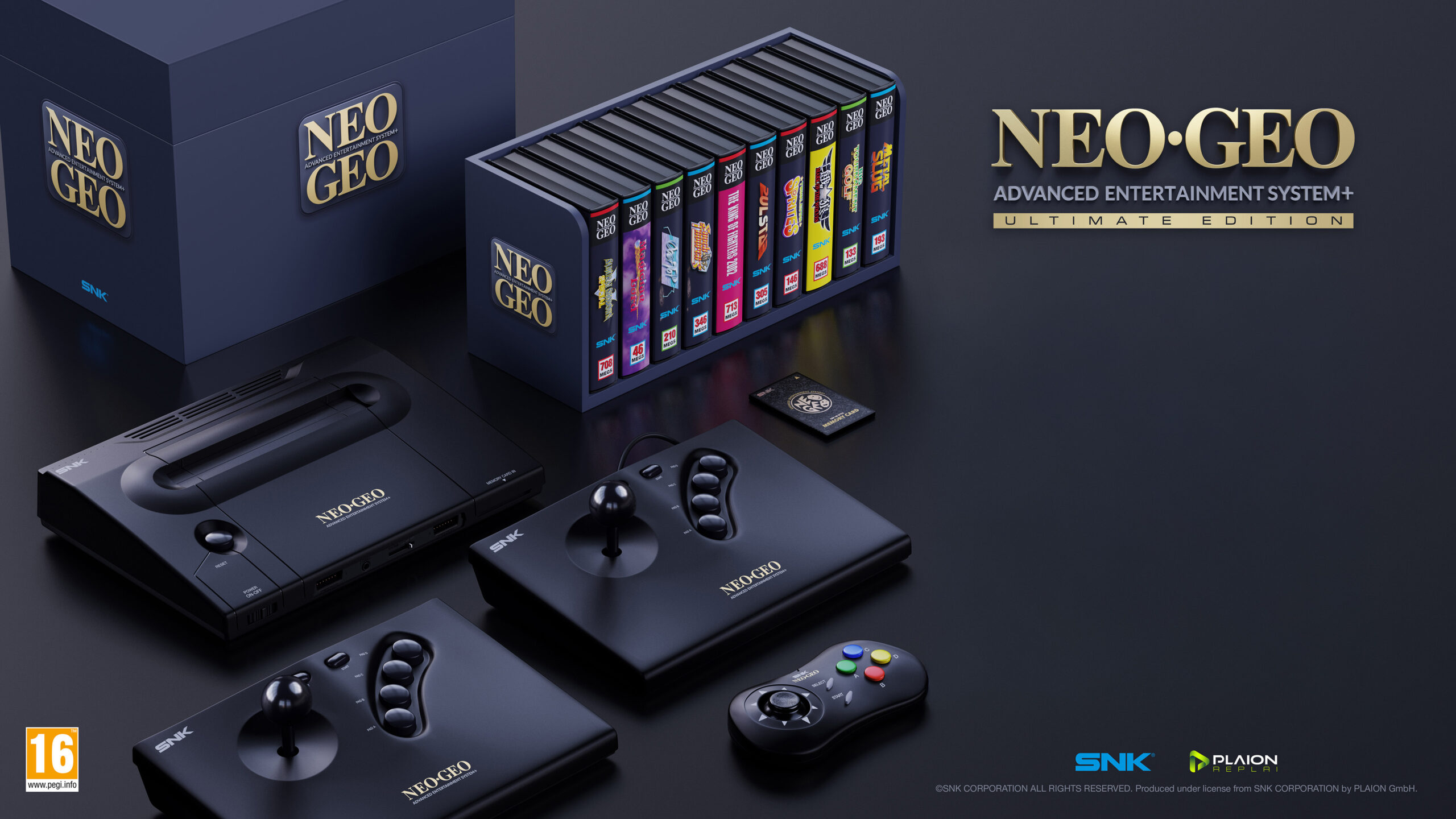
The stratospheric rise of retro gaming in popularity over the last decade has brought back a number of brand names you probably haven’t heard in a while: most recently, Neo Geo.
The announcement at the tail end of last week of the new Neo Geo AES+ set many a retro fan’s heart racing. For the first time, some of the most expensive home gaming hardware ever created – 1991’s Neo Geo AES was coming back as a retro-remake, not a wishy-washy emulation machine, but Neo Geo hardware so accurate it will play actual original AES cartridges alongside the 10 licensed games that are being re-released in AES+ dressing.
Nostalgia is big business. Suddenly, old Super Nintendos, Ataris, and Intellivision consoles that were essentially being given away at yard sales and car boot events have rocketed in value. eBay has emerged as the go-to marketplace for making huge profits on old, sometimes even non-functional hardware.
Pre-pandemic, you could probably pick up an “untested” Super Nintendo for around $10 on eBay. Now, the same listing is likely to be for $80 if you are lucky. Even old iPods are making a similar comeback.
There will always be those of us who prefer to play our old games on original hardware, but for those who aren’t really that bothered, we have had emulation and ROMs for many years now.
Emulation Has Limitations
Even if you ignore the slightly grey area of legality of actually possessing game ROMs, emulation has not been the perfect answer to a reliable retro fix. Most people who remember something like Donkey Kong or Pac-Man dearly will boot up an arcade emulator such as MAME, and things won’t be quite how they remember them. Maybe jumps are too difficult, or the ghosts seem a little faster. Our brains put that down to the fog of nostalgia, but that’s not quite the full story.
Latency introduced by modern displays and even controllers means the games don’t play “exactly” as they once did, and on games where precision was the difference between life and death, that counts for a lot. In many cases, it’s make or break.
So we stop playing and think things have merely moved on. They have, of course. Contemporary games put a premium on accessibility, for instance, while many games of the 8- and 16-bit eras are notoriously opaque, glitchy, and just plain strange. Nonetheless, within the nostalgia gaming community, there’s a drive for perfection when it comes to replaying classic games exactly as they were when they first came out.
The MiSTer FPGA project has long been the poster child for accuracy when it comes to retro gaming. It’s FPGA hardware rather than software emulation, in theory at least, producing cycle-accurate cores that trick the ROM into thinking it is running on original hardware, for better or worse.
It isn’t quite as simple as that. Each core is only as good as the people behind it. Some legends of the scene, such as Furrtek, went as far as “de-lidding” original chips on SNK’s Neo Geo and then reverse-engineering their innards. That’s not a task just anyone can undertake, and other system cores are not quite so accurate.
Faithfulness to the 90s Means Foregoing Technical Improvements
The return of Neo Geo means that all-time classics such as Metal Slug will be available once more.
These are not garage sale prices, unfortunately. The remakes will sell for $69.99 a cart, nearly as much as newly-released games for a modern platform.
That price tag may not matter to fans desperate to relive the glory days of 1990s gaming. The only thing “missing” from the rebooted experience will be some of the technical limitations of the era. Metal Slug is infamous for having some sections of gameplay that were too much for the original machine to handle, dramatically slowing down the action.
Modern emulation has largely removed those hardware limitations. If the AES+ is truly faithful to the original Neo Geo, that means it will cycle-accurately play the games as they played out in the 1990s. Weirdly, we want our games to perform less well.
It’s quite possible that the AES+ would not be possible without Furrtek’s work. The rumor is that Plaion, which makes the machine, has worked with both him and another FPGA legend, Jotego, on the chip that will reside inside.
The AES+ is only going to appeal to a certain demographic, however. It is not cheap, at well over $200, and if you are happy getting your fix on a cheap Chinese-made handheld, it will not be for you.
But the chance to play some of the greatest arcade games of the early 90s via HDMI on a big TV will seal the deal for a lot of people, even if the latency of modern displays may still create anomalies.
Compatibility Issues With Older Displays
That’s assuming one wants to play the games on a big screen and in high-def, however.
There is one notable omission in the effort to make AES+ truly faithful to the original Neo Geo. The games won’t look the same as they did back in the day, unless the display is also a period piece. And AES+ doesn’t connect easily to a 1990s CRT.
There have already been complaints that the AES+ does not natively offer old-school RGB out connections. This leaves the question, who is the Neo Geo AES+ actually for?
Many people who want the machine may be expecting to relive an experience it can’t quite provide. Those who aren’t quite so determined to relive the 1990s probably have other things on which they’d prefer to spend their cash.
It will, as is always the case, fall into the hands of the modders. That crowd will surely have a blast tearing it down, adding connections that aren’t meant to be there, and plugging them into things that aren’t easy to buy anymore.
For those willing to make the effort, there may be hacks to turn the AES+ into a time machine to 1991. However, it won’t be the out-of-the-box solution some are hoping for. It will be close, but will that be enough?
The Neo Geo AES+ is available to pre-order now, and arrives on November 12th and will be available in three versions at differing price points, capping out with the Ultimate Edition that will set you back $999.