

 When you buy through affiliate links in our content, we may earn a commission at no extra cost to you. Learn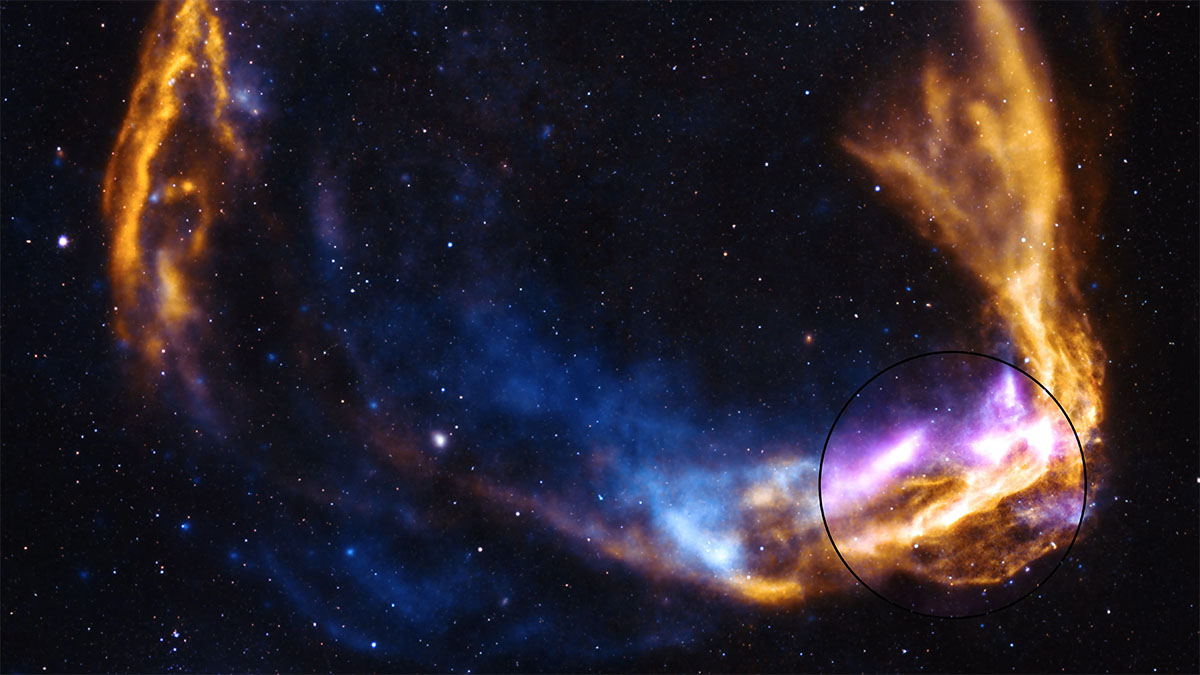
Neutrinos are tiny particles that, under normal circumstances, don’t interact with anything at all, yet you could owe your existence to them. Recent discoveries about how they behave in extreme conditions suggest that they play an outsized role in moderating supernovae, which, in turn, are the only reason anything you see around you exists in the first place.
The new physics in question is called fast flavor transformation, which refers to the conversion between the three types (“flavors”) of neutrinos happening over nanoseconds of time and centimeters of distance. Assistant Professor Ryuichiro Akaho of Waseda University, Japan, has used computer modeling techniques to show that this phenomenon has a strange and paradoxical effect when heavy stars explode at the end of their life cycles.
For the lightest stars capable of producing a supernova — which are still about eight times more massive than our Sun — fast flavor transformation accelerates the explosion. Yet for the very heaviest stars, up to about 20 times our sun, they have the opposite effect, slowing it down.
The reason that matters to life on Earth is that these core collapse supernovae are responsible for the formation of essentially all the heavier elements in the Universe. Without them, there would just be hydrogen and not much else. As Carl Sagan famously put it, “The cosmos is within us. We are made of star-stuff.”
Faster Explosions, More Star-Stuff
Akaho told Techopedia that the speed of the explosion is likely to affect the exact mix of elements that emerge from a supernova, though more research will be required before astrophysics can make any specific claims about that relationship:
“Nucleosynthesis is a very good way to connect the research to our everyday lives,” he said, using the technical term for the generation of heavier elements.
“We still do not have a definite answer on how much it is affected, because determining the amount of nucleosynthesis requires additional simulations. However, I expect that faster-expanding ejecta driven by fast flavor conversion will affect the nucleosynthetic yield.”
In other words, without the faster explosions driven by this neutrino behavior, there might not be enough “star-stuff” in the Universe to make worlds like ours.
Neutrinos Are Notoriously Hard to Study
Neutrinos are at the cutting edge of physics precisely because they do so little most of the time. They have no charge, so they don’t exert an electromagnetic force on anything. They also don’t interact via the strong nuclear force, which binds atomic nuclei together.
That leaves the weak nuclear force — which, as the name suggests, is very weak — and gravity. However, the mass of individual neutrinos is so small that for a long time, physicists weren’t sure they had any at all.
How weak is the weak nuclear force? Hold up your finger and count to ten. In that time, 650 billion neutrinos from the Sun will have passed through just the tip, and not a single one will have “touched” you.
You can see, then, why it’s so hard to learn anything about them. Neutrino detectors like Japan’s Hyper-Kamiokande and Canada’s Sudbury Neutrino Observatory require massive tanks of water buried hundreds or thousands of meters underground to shield them from other, more interactive types of particles. Even then, most detectors only manage to measure a handful of interactions per day, out of the unfathomably large number of neutrinos that pass through each day.
For instance, a back-of-the-envelope calculation suggests the apartment-building-sized Hyper-Kamiokande will have something like 200,000,000,000,000,000,000,000 (200 sextillion) neutrinos pass through its water tank daily. The physicists working on it say it will detect about 130 of them.
Yet, as mind-boggling as that number is, you’d have to add ten more zeros to arrive at the yield of a supernova, as measured in tons of TNT. Under that insane energy density, even neutrinos are colliding with other particles with enough force to shape the outcome.
Also in Science News
Russia to Decommission Problematic Space Station Module
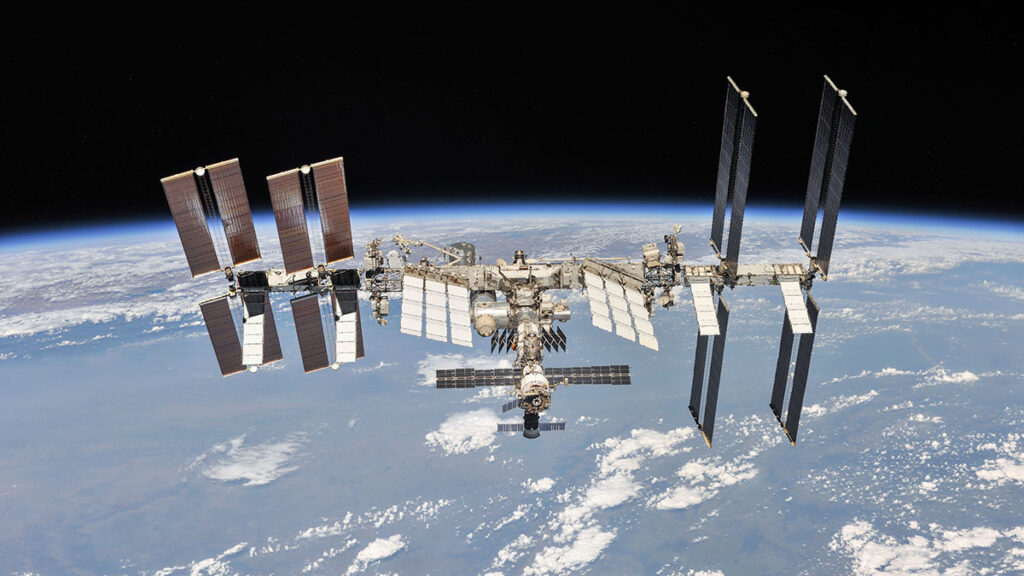
Last week, Techopedia reported that Russian cosmonauts’ attempts to repair a leak had forced NASA to tell its International Space Station crew to evacuate and shelter aboard the attached SpaceX vessel.
Now, Ars Technica reports that Roscosmos has finally relented to NASA pressure and will decommission the problematic PrK module ahead of schedule, rather than attempt risky repairs.
The station itself only has a few more years of life left in it and is expected to wrap up its mission at the end of 2030, after which it will be deorbited and allowed to burn up in the atmosphere.
Moderna Reportedly Months Away from New Ebola Vaccine
A new Ebola outbreak in May has put the disease back at the forefront of public anxieties and has drug companies scrambling to create new vaccines. Moderna, best-known as one of the first companies to create a viable COVID vaccine, says it expects to be conducting phase one trials within a matter of months, according to Scientific American.
Some Ebola vaccines already exist, but the disease is caused by a whole family of viruses, not just a single species. That leaves “holes” in the vaccine coverage, which Moderna and others are trying to patch.
Although deadly and gruesome, Ebola doesn’t pose the same sort of pandemic risk as COVID or the flu. That’s because the viruses are filament-shaped, so they’re transmitted by contact with bodily fluids and can’t become airborne like smaller, sphere-shaped viruses. The disease is also most contagious only after symptoms appear, making containment easier.
Quantum Computing Threatens Cryptocurrency
A pair of private sector researchers say that quantum computing will achieve cryptographic relevance within the next few decades, and the cryptocurrency community needs to start working on a mitigation strategy now.
Quantum computers are still in their infancy, but harness the indeterminacy of quantum particles to compute multiple possibilities at once. In terms of code-breaking, it’s like being able to stuff a whole ring of keys into the lock at once instead of trying them one at a time.
Iosif Gershteyn and Jacob Alber give it a 30% chance that quantum computers will advance enough to become a problem for Bitcoin and its ilk by 2040, and 60% by 2050. At present, they say over a third of Bitcoin and over half of Ethereum tokens would be at risk. However, they also believe that with immediate action, both supplies could be made quantum-proof before 2035.