

 When you buy through affiliate links in our content, we may earn a commission at no extra cost to you. Learn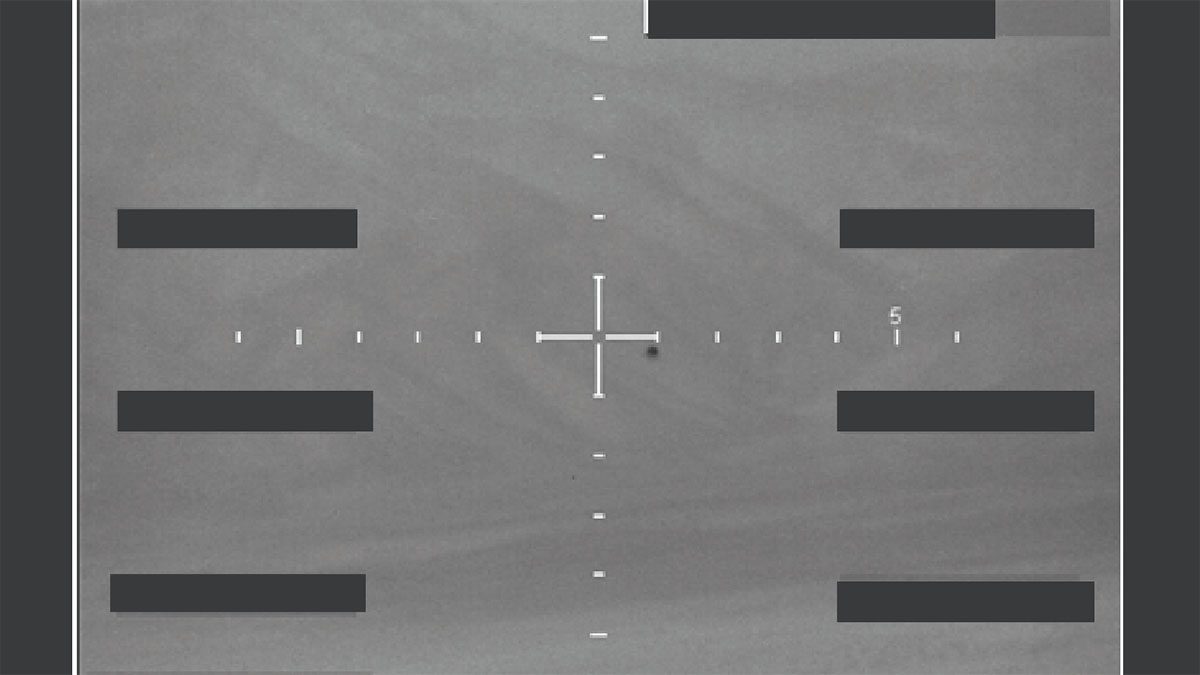
The White House has instructed the Department of War to begin releasing files related to UFOs and the first of these document dumps went online over the weekend. It contains 158 files, many of which are lengthy PDFs, so there’s a lot of information to digest.
None of the information released so far is likely to sway anyone who has already formed a strong opinion one way or another, but some of it makes for entertaining reading.
The breakdown of the files is as follows. In terms of source: 83 come from the Department of War itself, 48 from the FBI, 15 from NASA, and 12 from the Department of State. In terms of type: 117 are PDF scans of typed or written documents, 28 are in video file format (though some of these are audio-only), and 13 are still images.
The images are also available in a carousel at the top of the Department of War’s website. Their nature is characteristic of the quality of the data overall: most just show airborne dots that were never identified. One is an FBI sketch depicting what an up-close sighting might have looked like based on an eyewitness report.
The videos are similar. Most come from footage taken by military aircraft and show blips or streaks of light that are too distant or fuzzy to identify. That is, after all, what a UFO definitionally is: any airborne object that can’t be identified, not necessarily an extraterrestrial craft.
Browsing the data, I chose to focus on the NASA files, because I’m covering the science beat here at Techopedia and have a background in astronomy and astrophysics.
The COMETA Report
The document that UFO buffs would likely find the most compelling isn’t new, per se. It concerns the disclosure to NASA in 2001 of a 1999 French document called the COMETA Report. That report came to public attention in 2007, but the related correspondence between the American futurist writer Carol Rosin and NASA is new.
The COMETA Report prefers the term UAP (Unidentified Aerospace Phenomenon) to UFO, as it includes possible meteorological explanations. It describes four categories of UAP:
- Type A are phenomena that can be fully explained upon investigation.
- Type B are phenomena that have a likely explanation but insufficient evidence to be definitive.
- Type C are phenomena that lack sufficient evidence to make any sort of judgment.
- Type D are phenomena that have sufficient accompanying evidence to rule out every known explanation.
The report makes the remarkable claim that 4-5% of UAP reports fall into category D. It furthermore asserts that 20% of those have radar data to corroborate eyewitness reports.
Based on the sample size, that means that the team preparing the report found about 100 instances of eyewitness reports that, taken at face value, could not be accounted for by any known vehicle, object, or atmospheric phenomenon, and have radar data to support the fact that something was there.
The report concludes that an extraterrestrial explanation is the most scientifically plausible, then ventures into speculation about the nature of the alien craft, their technology, and what they might want, before making recommendations about how to deal with them.
It offers this summary of the details that are consistent between those 100 or so “confirmed” UFO sightings:
A relative consistency emerges from the numerous descriptions of the phenomena: saucer, luminous sphere or cylinder, hovering followed by accelerations at lightning speed, the absence of noise, easily supersonic speed with on sonic boom, associated electromagnetic effects that interfere with the operation of nearby radio or electrical apparatus.
Apollo 11 Crew Struggle to Describe a UFO
The other NASA documents and images concern unexplained sightings by the crews of various space missions. Many of these consist of star-like points of light (or X-ray emissions) in parts of the sky where there shouldn’t be a star, or strange flashes experienced by crews during their flights.
My favorite, however, is a partial transcript of the Apollo 11 crew’s debriefing, in which Neil Armstrong, Buzz Aldrin, and Michael Collins attempt unsuccessfully to describe an object they saw. They ultimately conclude that it was probably just something that fell off the spaceship and that they couldn’t get a clear focus on with the ship’s optical equipment.
However, their inconsistent descriptions are both typical of UFO eyewitnesses’ struggles to say exactly what they saw, and highly entertaining, reading like a bit of unintentional skit comedy.
Here’s an excerpt, partially redacted for brevity:
Aldrin: It seemed to have a bit of an L shape to it.

Armstrong: Like an open suitcase.

Aldrin: [...] It certainly seemed to be within our vicinity and of a very sizable dimension.

Armstrong: [...] It was very difficult to tell just what shape it was. And there was no way to tell the size without knowing the range or [vice versa].

Aldrin: [...] We were grossly misled because with the sextant off-focus what we saw appeared to be a cylinder.

Armstrong: Or really two rings. [...] Two connected rings.

Collins: No, it looked like a hollow cylinder to me. [...] When it came around end-on you could look right down in its guts. It was a hollow cylinder. But then you could change the focus on the sextant and it would be replaced by this open-book shape. It was really weird.

Aldrin: I guess there's not too much more to say about it other than it wasn't a cylinder.