


 When you buy through affiliate links in our content, we may earn a commission at no extra cost to you. Learn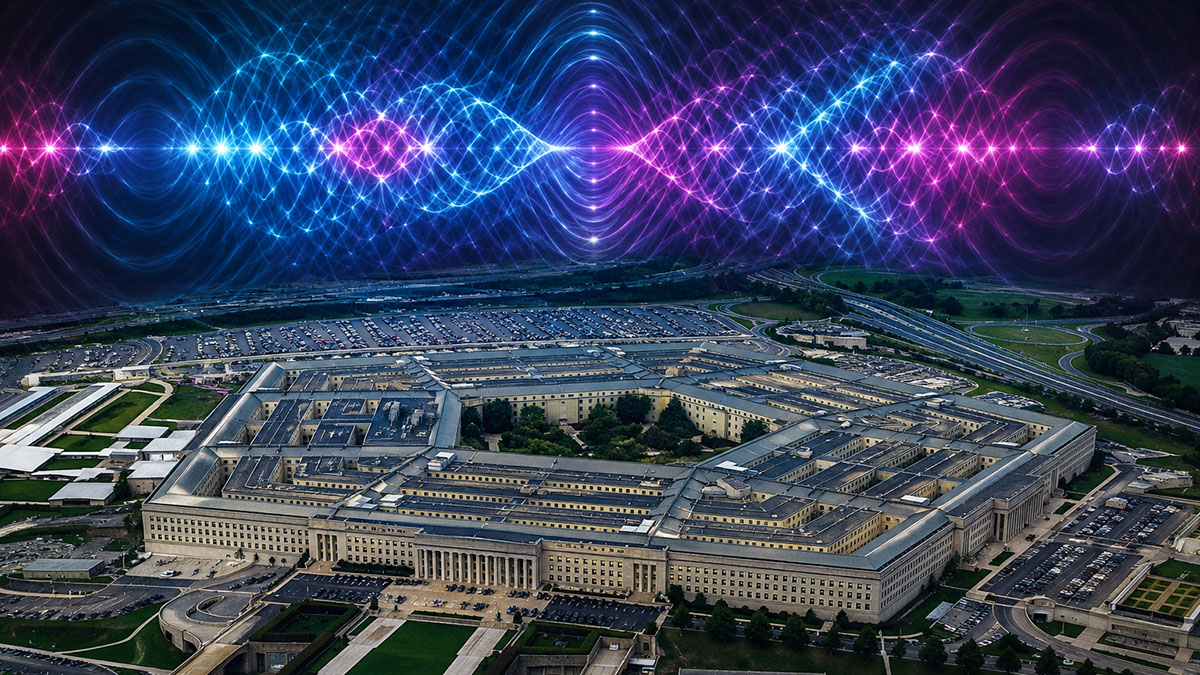
Every U.S. federal government agency will soon be scrambling to achieve “quantum preparedness” years ahead of the previous deadline, thanks to an executive order signed by President Trump earlier this week.
Titled Securing the Nation Against Advanced Cryptographic Attacks, the order gives agencies 180 days to appoint a Post-Quantum Cryptography migration lead, who will report to the National Cyber Director and the Office of Management and Budget. It requires every agency to transition to post-quantum keys by the end of 2030 and post-quantum digital signatures by 2031.
Efforts to this end were already underway, but on a slightly slower timeline. The National Security Agency under Biden had given most agencies until 2035. Under that order, defense and intelligence systems were on a tighter schedule, aiming for readiness between 2030 and 2033.
Opinions vary widely on the viability of quantum computing as a business or consumer technology. There are a number of practical issues that might be impossible or uneconomical to overcome, yet the quantum revolution could be as seismic a change as the advent of the microprocessor if engineers rise to the challenge.
Yet, even if they never become part of our daily lives, quantum computers will quite likely pose a national security risk within the next decade or two. One of the tasks they’re particularly well suited to is solving the mathematical problems underlying the most popular cryptographic algorithms in use today.
Computer scientists are hard at work devising new algorithms that should be “quantum-resistant,” but encryption is so fundamental to all modern computing infrastructure that switching systems is a daunting logistical task.
The Quantum Threat Is This Generation’s Y2K Bug
The U.S. isn’t alone in worrying about this. European governments are also targeting a fix by 2030. Last year, the Canadian government announced a 2035 deadline. The scale of the problem and urgency of the solution is reminiscent of the late 20th-century scramble to fix the so-called “Y2K Bug” before it brought the digital world to its knees.
The cryptocurrency world is also fretting about the problem. One pair of researchers estimates a 30% chance that quantum computing could put at risk one-third of the supply of Bitcoin and half of Ethereum by 2040.
That probabilistic assessment of the problem highlights one of the problems with the quantum menace, and a crucial difference between it and the Y2K bug. That is, that no one knows exactly when the problem will manifest.
The Y2K bug stemmed from the use across all major computer systems of two digits to store the year. That meant that databases around the world weren’t equipped to differentiate between 2000 and 1900, and could have encountered any number of issues once the new millennium started.
It’s a common misconception today that the Y2K bug was overhyped, because nothing bad ever happened. However, the reason nothing bad happened is that the IT world got together and spent years racing to fix the issue before that deadline.
Quantum computing will become a potential global catastrophe the moment any one government scrapes together enough functioning qubits to crack everyone else’s codes. It’s imperative that all important systems be ready before that happens, yet that could be in five years, 20 years, 50 years, or never.
Unmitigated Quantum Code-Breaking Would Mean an Unusable Internet
National security is only one part of the issue. If a quantum code-breaking machine fell into the hands of terrorist or criminal groups, then without mitigation, it would likely make the Internet unusable.
The reason is that cryptographic algorithms are about more than just privacy. They’re also crucial for authentication. Every legitimate website you visit these days uses HTTPS, not HTTP, and the difference between those is a digital certificate and cryptographic signature proving that you’re connected to the genuine site.
On the other end of things, user authentication is one of the main reasons that every public surface on the Internet isn’t covered in spam and malware links.
Whether you’re a proponent of transparency or privacy, cryptography is equally important. A public internet without cryptographic authentication wouldn’t be transparent — it would just be anarchy.
Quantum Codebreaking vs. the Brute Force Approach
Cryptography is based on operations that are easy to perform in one direction, but hard to reverse without knowing the initial setup. For instance, one popular standard, RSA, relies on the multiplication of prime numbers. If I told you to multiply 211 by 127, you could probably work that out on paper, even without a calculator. But if I had just given you 26,797 and told you to figure out which numbers it’s divisible by, that would take you considerably longer.
In RSA, the party intending to receive the message uses this large product to generate a public key and a private key. The public key, which is sent to the other party, can be used to encrypt the message, but only the private key can decrypt it. Knowing the prime factors of the original number would allow a hacker to derive the private key, but the difficulty of reversing the operation means such attacks require an impractically large amount of processing power.
Quantum computers leverage the quirk of physics that small particles can exist in multiple states at once, only “choosing” which they fall into when observed in a way that requires them to be one or the other. Conventional computing bits are like a lightbulb — either on or off. But a quantum “qubit” could be a mixture of on and off.
More importantly, that mixture of possibilities oscillates and has wavelike properties. When waves mix together, they can either amplify each other or cancel out. Quantum code-breaking algorithms arrange things in such a way that quantum interference tends to cause wrong answers to cancel each other out, while amplifying the correct one.
Post-quantum cryptographic algorithms use different types of mathematical problems for which none of the known quantum shortcuts would work.