

 When you buy through affiliate links in our content, we may earn a commission at no extra cost to you. Learn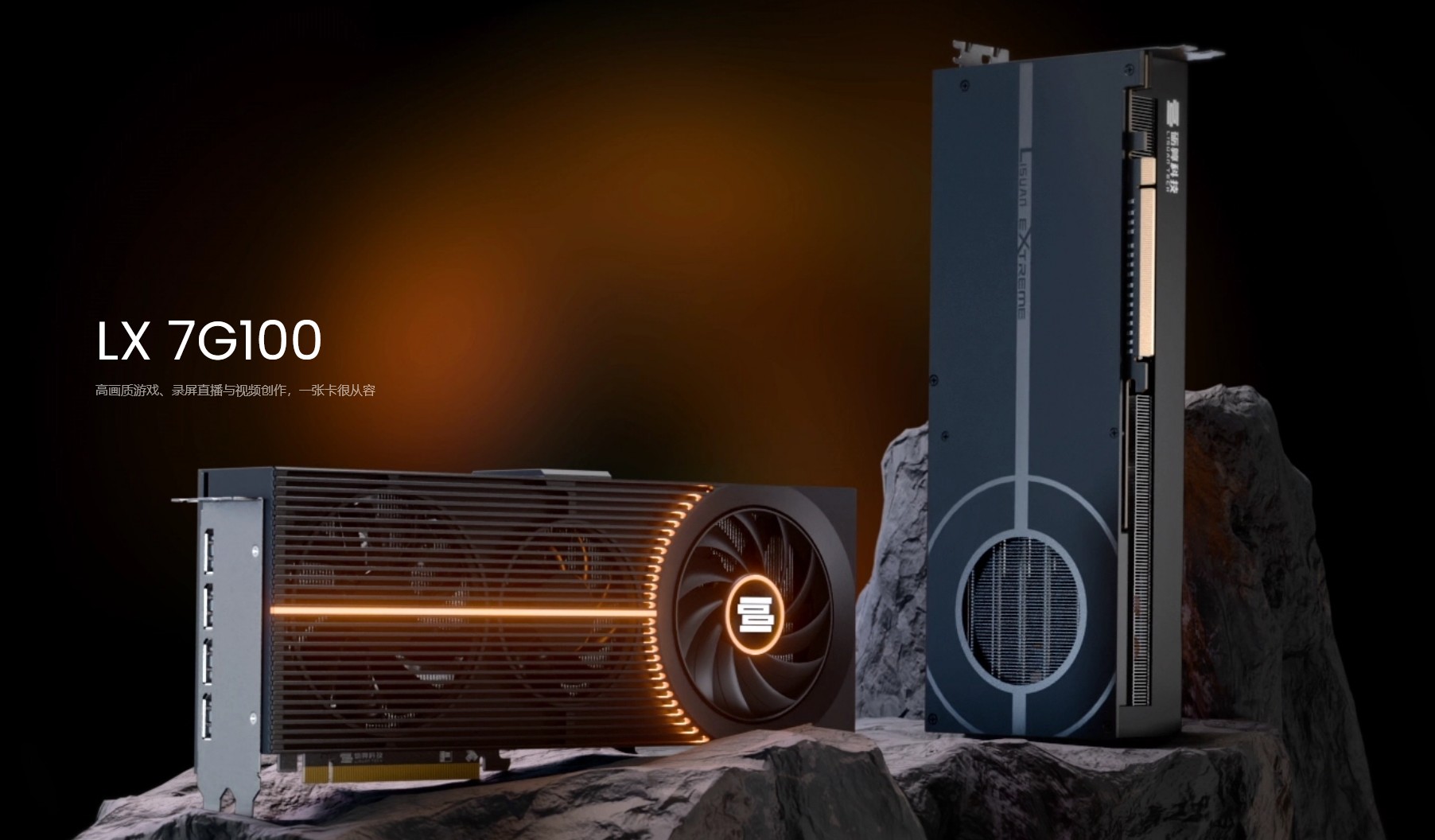
China’s domestic GPU industry has taken another step into consumer gaming with Lisuan Tech’s LX 7G100 Extreme Founders Edition, but the first wave of coverage shows just how difficult it is to compete with Nvidia, AMD, and Intel in real-world PC gaming, despite everybody’s initial hopes being high.
The 7G100 has launched for the Chinese market at around 3,299 RMB, or roughly $500. On paper, it packs some impressive specs:
- 6nm 7G106 GPU
- 12GB of GDDR6 memory on a 192-bit bus
- PCIe 4.0 x16 support
- 225W power rating
- Support for modern graphics APIs including DirectX 12, Vulkan 1.3, OpenGL 4.6, and OpenCL 3.0
- 8K60 HDR output
- AV1/HEVC video encode and decode
The hardest part of entering the gaming GPU market is not simply producing silicon. Gaming graphics cards live or die by the software stack built around them: drivers, API support, shader handling, compatibility, frame pacing, and game-by-game optimization.
7G100 Performance Fails to Beat Earlier Models
The challenge for the company now is performance. Early benchmarks shared from Chinese media and reported by Wccftech suggest the 7G100 often performs closer to older mainstream cards than its price might suggest. In 3DMark benchmarks, the card was described as worse than or broadly comparable to the RTX 3060. In games themselves, the results were more uneven still.
Running Cyberpunk 2077 at 1080p reportedly averaged 88 FPS on the 7G100, while an RX 6600 XT managed more than 200 FPS in the same comparison. Across tests, including Forza Horizon 5, Assassin’s Creed Shadows, Red Dead Redemption 2, CS2, and Black Myth: Wukong, the card struggled to match older Nvidia, AMD, and Intel alternatives.
There are still positives. Wccftech notes that the 7G100 is one of the first Chinese domestic GPU products to receive Microsoft WHQL certification and reported that the tested games ran without major crashes or obvious compatibility failures, even if stuttering, frame pacing, and performance were problems. For a first serious gaming-focused domestic GPU, that is not insignificant. It suggests Lisuan has cleared some basic software hurdles that have held back earlier attempts.
The wider significance is not whether players outside China should rush to buy the 7G100. At its current price and performance level, that is unlikely to be the case. The more important point is that China’s GPU industry is moving from demos and professional compute claims toward consumer gaming hardware at a time when traditional players in the space seem less interested in mass consumer sales.
For gaming tech, the 7G100 is a useful reminder that the graphics card market is not just a specs race. Building the chip is one part of the job. Building the drivers, tools, update pipeline, developer relationships, and trust around it is the harder task, and Lisuan Tech’s competitors have a lot more experience in the game right now.
Also in Gaming News
Nvidia Urges GPU Users to Patch Security Flaws
Staying with GPUs for a minute, and their driver software in particular, Nvidia has issued an urgent May 2026 security bulletin for its graphics card display drivers. It’s a reminder that all that fancy, expensive graphics hardware you bought is only as secure as the software running it.
The update covers multiple vulnerabilities across Nvidia GPU Display Driver, vGPU software, and cloud gaming components. Several are rated “High,” with possible impacts including denial of service, privilege escalation, information disclosure, data tampering, and code execution. Nvidia says users should install the update through its driver downloads page, while GeForce Windows users on the R595 branch need driver 596.36 or later.
GPU drivers operate close to the core of the system and manage communication between the machine and the hardware itself. A driver issue is therefore not just a question of whether a game crashes or loses performance. In some cases, such as this one, it can become a wider system security problem.
The practical advice is simple: keep GPU drivers updated with regular PC housekeeping. For the wider gaming hardware market, it reinforces the same point as the 7G100 launch above. GPU competition is more than just teraflops, memory bandwidth, or benchmark charts.
Rattle and Hum: Steam Controller’s Haptics Reveal New Capabilities
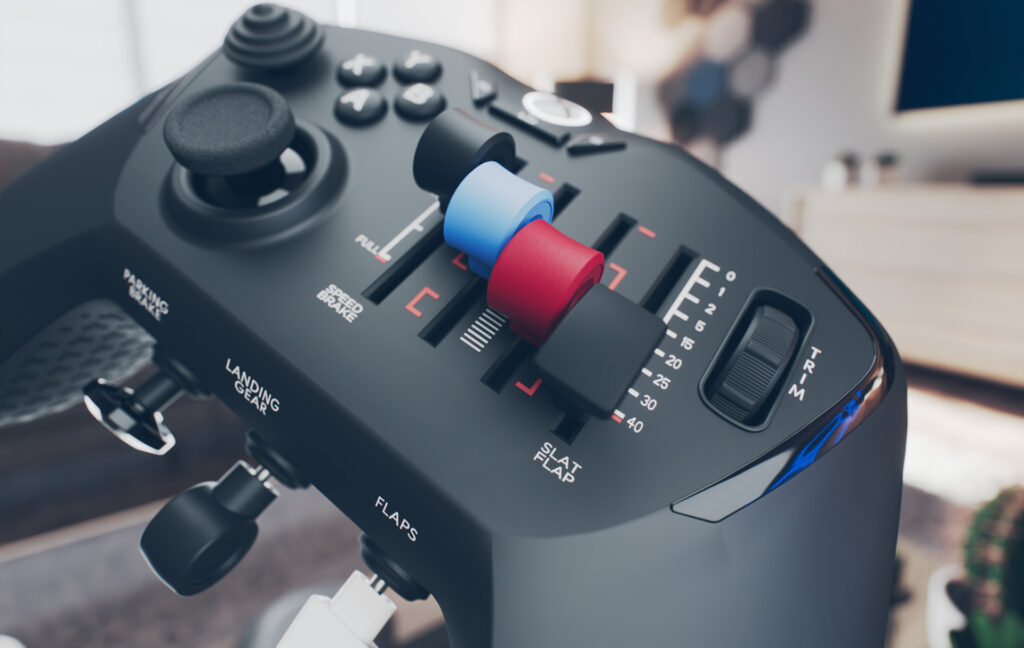
Valve’s new Steam Controller can apparently do more than scream when dropped, as we covered last week. It can also “sing” using its haptic motors, thanks to a new community tool called SteamHapticsSinger.
According to PC Gamer, the software lets users drop MIDI files into the tool and have the Steam Controller attempt to recreate them through haptic feedback. Examples already tested include Portal’s “Still Alive,” the Wii Shop Channel theme, and even an attempted Rickroll. The tool is a fork of older Steam Controller haptics software originally built around the 2015 model, now updated for Valve’s newer hardware.
It is obviously a novelty, but it also shows that haptics are becoming a more interesting part of controller design. Modern gamepads are no longer just input devices with basic vibration motors. Between the DualSense, Steam Deck trackpads, adaptive triggers, and Valve’s newer controller hardware, tactile feedback is becoming more programmable and expressive. It remains to be seen whether stressing out the hardware with remixes of Rick Astley will cause issues further down the line with longevity.
As haptics in controllers advance, they can communicate information without relying on the screen or speakers. In games, that could mean more detailed feedback for terrain, recoil, rhythm, UI actions, or accessibility cues. A controller playing “Still Alive” through rumble motors is silly, but it points to a wider idea: controller feedback is becoming another software layer for developers and players to experiment with.
Ubisoft’s Teammates Shows Generative AI Moving Into Gameplay
Ubisoft says it is accelerating investment in Teammates, its first playable generative AI experience, making it one of the more notable AI-in-games projects to watch.
According to Insider Gaming, Ubisoft referenced Teammates in its latest financial report out this week, saying it is increasing investment behind the project while also making progress on other AI applications across development pipelines. The company described possible uses ranging from more intelligent bots for quality control teams to smarter NPCs and game worlds that can adapt to player behavior in real time.
Generative AI in games is often discussed as a behind-the-scenes production tool enabling faster concept work and tighter prototyping. Teammates is different because Ubisoft is positioning it as something players can interact with directly, though it will doubtless still be labeled “AI slop” across the internet.
When the project was shown in 2025, Ubisoft presented an FPS-style experience with AI-driven NPCs and an assistant that could respond dynamically as the player explored. The promise is more reactive characters and worlds. The risk is consistency, moderation, authorship, and whether, at this stage at least, AI-generated responses can match the quality of handcrafted, human narrative design. There is also currently a strong user pushback against anything AI in gaming from many of the people who buy the games.
For Ubisoft, Teammates could become a test case for whether generative AI can improve immersion without making games feel less authored or less controlled, but how that will be received by the players themselves remains much more nebulous.